Archive | Daring Bakers Challenges RSS feed for this section

Daring Bakers: Challah Back Y’all!

27 May

May’s Daring Bakers’ Challenge was pretty twisted – Ruth from The Crafts of Mommyhood challenged us to make challah! Using recipes from all over, and tips from “A Taste of Challah,” by Tamar Ansh, she encouraged us to bake beautifully braided breads.

After this challenge, I can’t say “challah” without thinking “holla!”. I had so much fun with this one!

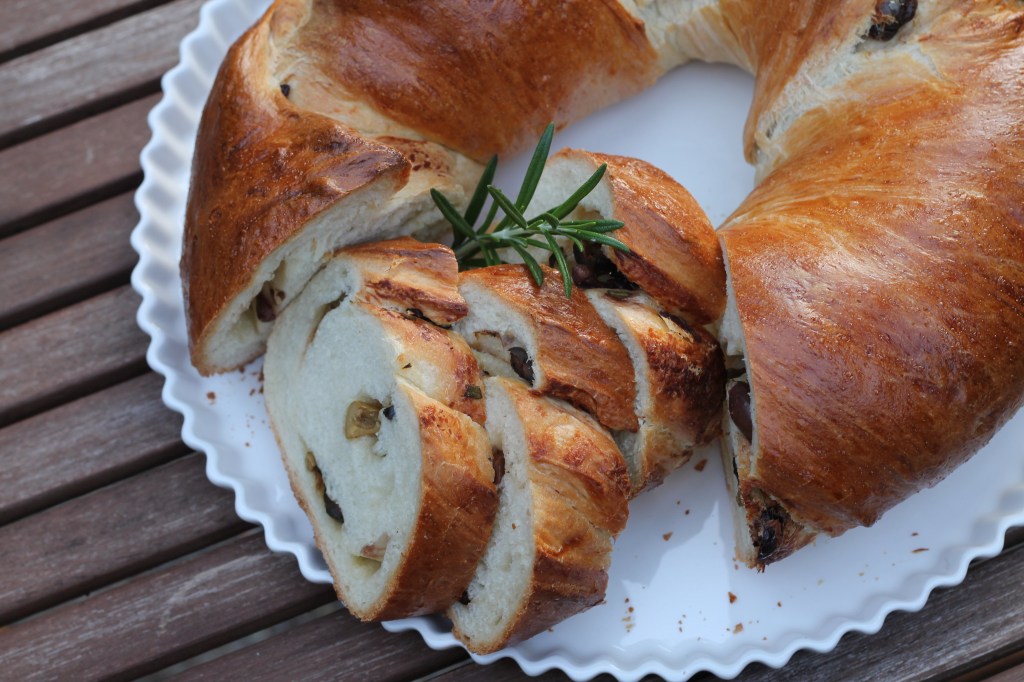
I made three different kinds of challah: plain honey white challah, whole wheat challah filled with apples, cinnamon, and maple syrup, and sourdough challah. Even more fun than all the different varieties were the different braiding techniques that Ruth, our host, encouraged us to try. I went for a six-strand braid, a five-strand braid, and a four-strand braided round. If you’ve never shaped bread like this before, challah is a great way to start: the dough was really easy to work with and good for braiding. (more…)

Daring Bakers: Armenian Treats

27 Apr

The Daring Bakers’ April 2012 challenge, hosted by Jason at Daily Candor, were two Armenian standards: nazook and nutmeg cake. Nazook is a layered yeasted dough pastry with a sweet filling, and nutmeg cake is a fragrant, nutty coffee-style cake.

Armenian baking is not something I had ever contemplated before this challenge, which may ring true to many (have you ever contemplated Armenian baking?). However, Nate’s paternal forebears came from Armenia several generations ago, and he has a very Armenian last name, so it does surprise me just a little bit that, me being me, I never looked into it. That’s totally something I would do. (more…)

Daring Bakers: Dutch Crunch Rolls

27 Mar

Sara and Erica of Baking JDs were our March 2012 Daring Baker hostesses! Sara & Erica challenged us to make Dutch Crunch bread, a delicious sandwich bread with a unique, crunchy topping. Sara and Erica also challenged us to create a one of a kind sandwich with our bread!

Despite the fact that I was really hoping for a ridiculous, elaborate, sugary baking project for this month’s challenge, these Dutch Crunch Rolls are pretty fantastic. I had never heard of Dutch Crunch bread, but it turns out that it’s a San Francisco local specialty that originated in the Netherlands (hence the name). In Dutch, it’s called tijgerbrood, or “tiger bread” because of the way the topping cracks to look like tiger stripes (although there’s a growing consensus that it looks more like a giraffe’s spots!). “Dutch crunch” refers to the yeasted rice flour topping that is applied to the bread before baking, rather than to the bread itself, which can be any kind of soft-ish sandwich-style bread.

Going into this challenge, I was a bit apprehensive after seeing on the Daring Bakers forum that some people were having troubles with getting the topping to crackle and brown properly, so when I took these out of the oven, I was pretty happy about it!

I was really impressed with the bread recipe that Sara and Erica provided, and I may have found my new “go-to” white sandwich bread! Nice and soft but still with a good texture and great flavour. The Dutch Crunch topping added a really interesting texture contrast and was very tasty, and was a really easy way to add a little something extra to plain bread.

For the second part of the challenge, it definitely made delicious sandwiches! I made a grilled turkey, bacon, and avocado club sandwich with homemade mayonnaise for dinner the day I made the rolls.

For breakfast the next morning, I toasted the buns and made breakfast sandwiches with egg, cheese, ham, and avocado. Yum!

Thanks Sara and Erica for showing us this tasty way to make bread! I always get such a feeling of pride when I take bread out of the oven, and these rolls were very satisfying to make :) Check out the Daring Kitchen for the other Bakers’ gorgeous tijgerbrood!

Dutch Crunch Rolls

Soft White Rolls

Recipe provided by Sara and Erica, adapted from Rose Levy Beranbaum’s The Bread Bible and Baking Bites. I made only half of the following recipe to make 4 decent-sized rolls. The full recipe as written would yield 6 large rolls or 8 more reasonable ones.

In the bowl of an electric mixer, combine:

1 tbsp active dry yeast

1/4 cup warm water

1 cup warm milk

1 1/2 tbsp granulated white sugar (I might try 1 tbsp honey next time)

Stir to dissolve and let it sit for about 5 minutes, until foamy.

Add:

2 tbsp vegetable oil

1 1/2 tsp salt

2 cups all purpose flour

With the dough hook attachment, stir on medium speed to combine.

With the mixer still going, add up to 2 additional cups of flour, 1/4 cup at a time, until the dough starts to come away from the sides of the bowl but is still sticky.

At this point, add a few tablespoons more flour, then let the mixer knead the dough for about 4 minutes, until the dough comes cleanly away from the sides of the bowl and is soft, elastic, and not too sticky to the touch. (Alternately, you can knead the dough on a lightly floured surface for about 4 minutes).

Take the dough out of the bowl, grease the bowl lightly with vegetable oil, and place the dough back in it, turning to coat it in the oil. Cover the bowl with plastic wrap and let rise in a warm place for 1 hour, or until doubled in size.

(I could have sworn that I read in the instructions to punch the dough down after it rose double, but apparently I was making it up! Anyway, I punched it down and let it rise a little while longer at room temperature and then in the fridge, and it didn’t seem to hurt the final product at all!)

Turn the risen dough onto a lightly floured surface and divide it in two. Divide each half into three or four pieces (keep in mind that I made half the recipe, hence only four pieces total).

Shape each piece into a roll by holding it in your palm, pulling/pinching the edges into the middle, and then patting down the pinched bits.

Place the rolls seam-side down on a parchment-lined baking sheet. Turn on the oven to 350˚F, and let the rolls rise for about 15 minutes while you make the Dutch crunch topping.

Dutch Crunch Topping

Recipe adapted from Rose Levy Beranbaum’s The Bread Bible. A few Daring Bakers used sesame oil in place of the vegetable oil and added Marmite to the topping, both of which sound like delicious variations to try. Makes enough to cover 6-8 rolls from the above recipe.

In a bowl, whisk together:

1 tbsp active dry yeast

1/2 cup warm water

1 tbsp sugar

1 tbsp vegetable oil

1/4 tsp salt

3/4 cups rice flour (white or brown – I used brown. Make sure it’s NOT sweet or glutinous rice flour)

At first the mixture will be quite pasty, but with vigorous stirring it will liquidify a bit. Add a few drops of water or a sprinkle of rice flour as needed to adjust the consistency – it should be drippy but spreadable, like stiff royal icing

Let the batter stand for 15 minutes while the rolls finish their rise. The rice flour batter will also puff up and rise a bit because of the yeast.

Spoon the rice flour batter over top of each roll and spread it out in a thick layer.

Bake in the preheated 350˚F oven for 25-30 minutes, until the topping is crackled and well-browned and the bottom of the rolls sound hollow when tapped. I baked the rolls with steam to encourage browning, but I’m not sure if it actually made a difference. To do this, place a roasting pan in the bottom of the oven when you turn it on. When you put the rolls in, pour about half a mug of hot tap water in the roasting pan, which will provide steam while the rolls bake.

Let the rolls cool completely on a rack. The rolls are best the day they are made, but if you want to keep them a day longer, I found they were fine left out over night – just don’t put them in a plastic bag or they will soften and lose their crunch. These rolls make a mean sandwich!

Cross section of a delicious sandwich - you can also see the crumb of the roll.

Daring Bakers: Quickbread

27 Feb

The Daring Bakers’ February 2012 host was – Lis! Lisa stepped in last minute and challenged us to create a quick bread we could call our own. She supplied us with a base recipe and shared some recipes she loves from various websites and encouraged us to build upon them and create new flavor profiles.

A quickbread is a sweet or savory bread/cake that is made with baking powder or baking soda (and sometimes eggs) rather than yeast, thereby making it “quick” to make, start to finish. Scones, muffins, popovers, Irish soda bread, and loaves like banana bread and tea cakes all fall into this category.

A beautiful, golden brown, airy popover

My quickbreads for this challenge all happened to be sweet, and after looking though a bunch of recipes, I wondered, where do you draw the line between a sweet quickbread and a cake? The answer is… it all comes down to the shape of the pan ;) . A sweet quickbread is generally baked in a loaf pan and often comes out more dense and rustic-looking than a cake, and may include things like fruit in the batter. Any quickbread batter can also be baked as muffins, and then, depending on what’s in them, it’s a toss-up as to whether to call them muffins or cupcakes…

Apples, carrots, apricots, raisins, and seeds say "muffin" rather than "cupcake"

Somehow, anything baked in a loaf pan or muffin tin is a lot more acceptable to eat for breakfast, and in my case, totally OK to slather with butter.

Even though it wasn’t a complicated challenge this month, the Daring Bakers taught me something new (actually, a few somethings). Here’s what I learned:

First, quickbreads are generally made in one of three ways:

  1. The muffin method (aka 2-bowl method), in which the dry and wet ingredients (including a liquid fat, such as melted butter or oil) are mixed separately, them combined gently with as few strokes as possible. The idea is to avoid creating tough gluten strands by overmixing, and the end result is usually moist and tender with a larger crumb.
  2. The creaming method, in which a solid fat (such as butter) is creamed with the sugar, egg and flavourings, then the dry ingredients and any other liquids are mixed in. Most cakes are made with this method, so it stands to reason that this will give a lighter, more finely-textured end result.
  3. The cutting-in method, in which a chilled, solid fat (again, usually butter) is cut into the dry ingredients, and the wet ingredients are folded in gently. This gives a baked good with a flaky texture. These scones are good examples of this method (as are these banana breads).

The two-bowl "muffin method"

Second, there are generally three types of quickbread batter:

  1. Pour batter, which has an equal ratio of wet to dry ingredients and, as the name suggest, can be poured. The end result is usually moist and dense – think pancakes.
  2. Drop batter, with a 3:1 ratio of dry to liquid. This is generally muffin and loaf batter, and ends up moist and fluffy.
  3. Stiff batter, with a 7:1 ratio of dry to liquid, such as scones or Irish soda bread. This gives a light and fluffy end result.

A "pour batter" is... pourable!

Third, especially with the muffin method, the gluten in the flour is important, in that less is more. Lower gluten flours are best because they keep the baked good from getting tough, and to help this out you can replace up to 4 tbsp per cup of all purpose flour with cake flour.

OK, enough with the learning. Lis gave us a basic quickbread recipe to play around with, so my first attempt, at Nate’s request, was a Brown Sugar Caramel Apple Struesel Loaf.

Then I decided to recreate the Good Morning Muffin from Pure Vanilla Bakery in town, using my favorite muffin recipe as a base. These babies have chopped apple, grated carrot, dried apricots, golden raisins, coconut, sunflower seeds, and flax seeds in them, and are topped with a sticky orange glaze (which is actually frozen orange juice concentrate – it’s my favorite part!).

And then, after seeing Renata’s amazing-looking popovers on the Daring Bakers forum, I decided to give them a try. A popover is very similar to a Yorkshire pudding but made without the beef drippings, and can be served with butter and jam rather than gravy. I coated these in cinnamon-sugar to make Cinnamon Sugar Doughnut Popovers, inspired by David Lebovitz. I made theme once according to David’s recipe, which came out under-cooked and doughy, and a second time using the recipe Renata provided, which came out perfectly. Moral of the story: bake the popovers until they are deep brown and crisp! These are SO GOOD and will satisfy any doughnut cravings.

Thanks to Lis for not only hosting this challenge, but for running the Daring Kitchen and giving us all the chance to do this every month!! Check out the Daring Kitchen for the original challenge and all the other Bakers’ contributions!

Brown Sugar Caramel Apple Struesel Loaf

Makes one 9″ x 5″ loaf

Brown Sugar Caramel Sauce

Adapted from Modern Classics II by Donna Hay

In a small, heavy saucepan, combine:

6 tbsp brown sugar

1/2 cup heavy whipping cream

dash salt

Place over medium heat and stir until the sugar is dissolved. Increase the heat slightly and bring the mixture to a boil. Let it simmer rapidly for about 8-10 minutes without stirring (watch it carefully and remove it from the heat if it looks like it will boil over). Pour the caramel into a bowl and set it aside to cool while you make the struesel.

Cinnamon Struesel

Adapted from Flour Power: Recipes from Jana’s Bake Shop by Jana Roerick

In a bowl, mix together:

1 cup all purpose flour

3/4 cups brown sugar

1 tsp cinnamon

1/4 tsp baking powder

1/4 tsp salt

With your fingers, rub in:

6 tbsp unsalted butter, softened

Mix until the butter is fully incorporated and the mixture is crumbly-looking. Set aside while you make the batter.

Apple Cinnamon Batter

Adapted from the basic recipe provided by Lis for the challenge

Preheat the oven to 350˚F. Grease a 9″ x 5″ loaf pan and line the bottom and sides with parchment paper (I didn’t do this and almost had a near-death sticking experience!).

In a bowl or measuring cup, whisk together the wet ingredients:

1 cup sour milk (1 tbsp white vinegar + enough milk to make 1 cup)

1 egg

1/4 cup neutral-flavoured vegetable oil

In a large bowl, whisk together the dry ingredients:

1 1/2 cups all purpose flour

1/2 cup cake flour

1 cup granulated sugar

1 tsp baking soda

1/2 tsp salt

1 tsp cinnamon

Add:

1 chopped apple

Toss gently to combine, then make a well in the center of the dry ingredients. Pour in the wet ingredients and with a rubber spatula, stir just to combine, using as few strokes as possible. There should still be a few lumps and streaks of flour.

Sprinkle over 2/3 of the cinnamon struesel and 2/3 of the cooled brown sugar caramel and fold them into the batter with three or four strokes.

Pour the batter into the prepared pan and spread it evenly. Pour over the remaining caramel and sprinkle with the remaining struesel.

Bake at 350˚F for 65-75 minutes, or until a skewer inserted in the middle comes out clean. Cool for 5 minutes in the pan, then remove, peel off the parchment, and cool completely on a rack.

Will keep for a few days wrapped in plastic or in an airtight container.

“Good Morning” Muffins

Inspired by Pure Vanilla Bakery + Cafe, adapted from these muffins. Makes 12.

Preheat the oven to 375˚F. Lightly grease the top of a muffin tin and line the cups with paper liners (or these nifty silicon liners).

In a small bowl, combine:

1/3 cup chopped dried apricots

1/3 cup golden raisins

Pour over 1/3 cup boiling water to rehydrate the fruit. Set aside.

In a small bowl, mix together the wet ingredients:

3/4 cup plain yogurt

1/4 cup brown sugar

2 tbsp granulated sugar

1 egg

5 tbsp neutral-flavoured vegetable oil

1 tsp vanilla

In a large bowl, mix together the dry ingredients:

3/4 cup all purpose flour

3/4 cup whole wheat flour

1 1/2 tsp baking powder

1/4 tsp baking soda

1/4 tsp salt

Make a well in the dry ingredients and pour in the wet. With a rubber spatula, mix until just combined. There should still be lots of lumps and streaks of flour.

Add:

1/2 an apple, chopped

3/4 cup grated carrot

the rehydrated apricots and raisins (discard any liquid that hasn’t been soaked up)

1/4 cup shredded unsweetened coconut

2 tbsp hulled sunflower seeds

1 tbsp flax seeds

Stir everything together gently in as few strokes as possible.

Spoon the batter into the prepared muffin tins and sprinkle each muffin with a few flax seeds and sunflower seeds.

Bake at 375˚F for 20-25 minutes, until a toothpick inserted in the center comes out clean. While the muffins are still hot, brush the tops with 2 tbsp thawed orange juice concentrate.

Remove the muffins from the tin and cool on a cooling rack. Best eaten the day they are made, but will keep a day or two in an airtight container.

Cinnamon Sugar Doughnut Popovers

Inspired by David Lebovitz, recipe adapted from Second Floor Walkup. I made 6 large popovers, but next time I would make 12 smaller ones. You could omit the sugar all together and replace the butter with beef drippings to make Yorkshire puddings, which I will be doing the next time we have roast beef!

Preheat the oven to 425˚F. Grease the cups of a muffin tin VERY liberally with butter, then place a small piece of butter in the bottom of each. Put the pan in the oven to preheat.

Meanwhile, in a bowl, beat together with a whisk:

2 eggs

1 cup milk

1 tbsp melted butter

Add:

1 cup all purpose flour

1 tsp sugar

pinch salt

Whisk vigorously so there are no lumps.

When the oven reaches 425˚F, remove the muffin pan, pour the batter evenly between the greased cups, and place the pan back in the hot oven.

Bake for 15 minutes, then reduce the heat to 350˚F and bake another 15-25 minutes, until deeply golden brown and crisp. DO NOT open the door to peek at your popovers before the second 15-minute mark – this will cause them to collapse.

They were a lot darker brown in person

While the popovers are baking, mix together:

1/2 cup granulated sugar

1 tsp ground cinnamon

Have ready:

2-3 tbsp melted butter

When the popovers are baked, remove them from the muffin tin (you may need to coax them out with a butter knife), brush them lightly with melted butter, and roll them in the cinnamon-sugar. Place on a rack to cool.

These are best eaten the day they are made (which shouldn’t be a problem!).

Daring Bakers: Scone Mojo

27 Jan

Audax Artifex was our January 2012 Daring Bakers’ host. Aud worked tirelessly to master light and fluffy scones (a/k/a biscuits) to help us create delicious and perfect batches in our own kitchens!

Audax, who can offer a wealth of information, tips, and tricks for every challenge (even when he’s not hosting it), did not disappoint with this one. When I saw that the challenge was scones, I honestly wondered how much I would learn, being that I already considered myself to have “mastered” scones – I learned to make them in grade 7 Home Ec, and have been turning them out very successfully ever since. The spirit of this challenge was to find a way to make scones that works best for you, and Audax did a ton of research on what makes a good scone and the techniques to use to make them more flaky or more tender and cake-like. All things I never knew before! He also went into the difference between a scone and a biscuit, which as far as I understand, mostly comes down to geography: they are essentially the same thing, but in America they are called biscuits, and anywhere with a British influence they are called scones. In general, I personally tend to think of scones as sweet (or served with sweet things) and biscuits as savory (or served with savory things).

Despite the fact that scones (or biscuits, depending on who you’re talking to) are quite simple to make, this challenge actually gave me the most trouble out of any so far – probably because they *are* so simple and I already know how to make them, which somehow lead to me psyching myself out and losing my scone mojo! I made two trial batches of the challenge recipe, one that was supposed to be flakier and the other more tender and cake-like, and invited Lynette over for a scone-tasting tea party. Unfortunately, we were both disappointed with the scones. They were kind of tough and hard, which was surprising to me because I generally make really good scones. I think I got hung up on the instruction in the challenge recipe to handle the dough enough to develop some of the gluten, which helps the scones rise – usually I handle the dough very little and get great results! Turns out that my recipe and the challenge recipe are actually quite similar, so instead of re-inventing the wheel (or the scone, as it were), I decided to go back to *my* recipe – which I already know works best for me – and use some of Audax’s tips and techniques to come up with 1) a more flaky scone, and 2) a more tender, cakey scone. And lo-and-behold, my scone-making mojo returned. Whew! I was worried for a bit. The moral of the story? If it ain’t broke, don’t fix it. And trust your scone-making instincts! ;)

It still took me some trial and error to get these scones just the way I wanted. I was dreaming of a deep, dark, chocolately, flaky scone, and also of a more cakey vanilla bean scone with vanilla glaze (inspired by the Pioneer Woman). I added too much liquid to my first batch of chocolate scones, so they were heavy rather than flaky. However, as soon as I bit into a scone from my second batch, I knew I had gotten it right: deep, dark, and chocolatey in taste but also light and layered in texture. The cocoa powder in the dough kept them from being quite as flaky as scones made with just flour, but they were perfect paired with some Devonshire cream (recipe to come!) and strawberry vanilla jam. The vanilla bean scones weren’t quite vanilla-y enough the first time around, and I made the glaze too thin to actually stay on the scones, so for my second batch, I steeped the vanilla seeds and pods in warm cream, and thickened up the glaze. The result? Subtle vanilla and tender scone perfection.

Thanks Audax for all the work you did in preparation for this challenge! Check out the Daring Kitchen for the original challenge recipe and the scone contributions this month – there are some awesome-looking variations!

Double Dark Chocolate Scones

The techniques used in this recipe – grating the butter, rubbing it into the flour, and folding the dough – can be used with any scone recipe to enhance their flakiness.

In a bowl, whisk together the dry ingredients:

3/4 cup all purpose flour

1/4 cup Dutch process cocoa powder (sifted to get rid of any lumps)

2 tbsp granulated sugar

2 tsp baking powder

pinch of salt

With a box grater, shred:

3 tbsp cold unsalted butter

Toss the butter into the flour-cocoa mixture with a fork, then dive in there with your hands to “rub in” the butter: squeeze the butter and flour gently between your finger tips to create flat little “leaves” of butter coated in flour (this is easiest with cold, dry hands). It should look like this:

Stir in:

2 oz chopped dark chocolate (or chocolate chips)

Pour in:

1/2 cup cold milk

Add the milk all at once and stir briskly with a fork – think of it as more of a folding action to incorporate the dry stuff from the bottom of the bowl with the milk. Stir just until it starts to come together in a loose dough.

Turn the dough out onto a lightly floured surface and squeeze/knead gently once or twice to gather it together. Sprinkle it with a little flour and gently press it flat with your fingertips. Fold it in half and press flat again. Repeat for a total of three folds, then shape it into a circle about 2 cm thick. Cut it into six wedges with a sharp, lightly floured knife. Place on an ungreased cookie sheet and brush the tops lightly with milk (try not to let it drip down the sides – this will interfere with the rise). Bake at 425˚F for 12-14 minutes, until the bottoms sound hollow when tapped with your finger. Cool slightly on a rack, then serve warm with jam and cream.

Vanilla Bean Scones

Using a pastry cutter to cut the butter into tiny bits and a gentle kneading (4-5 times only) results in a more tender, cake-like crumb. Instead of vanilla beans, you can use vanilla extract (about 1 – 1 1/2 tsp) and skip the steeping step – but I love the look of the little black vanilla seeds (aka vanilla caviar, a fittingly decadent nickname!). These are “cream scones” because they are made with cream, but they can also be made with milk. If you don’t want to glaze them, you can brush the tops of the scones with a little extra cream before baking, to give them a nice golden finish.

Vanilla Bean Cream

This is used as the liquid in the scones, and to make the glaze. It needs to be heated and then cooled completely, so make it at least an hour ahead.

Scrape the seeds from 1 vanilla bean and mix them into 1/2 cup + 2 tbsp half and half cream. Throw the scraped pod in there too. Heat the vanilla cream up in the microwave until warm, and it steep with the vanilla for about 15-20 minutes, then refrigerate until completely cold. Remove the empty vanilla pod. Reserve 2 tbsp of the cream for the vanilla bean glaze, and use the remaining 1/2 cup in the scones.

Scones

In a bowl, combine:

1 cup all purpose flour

2 tbsp sugar

2 tsp baking powder

dash salt

Stir together with a whisk, then add:

3 tbsp cold unsalted butter, cubed

Using a pastry cutter, cut the butter into the flour until it is in very small pieces and the mixture resembles coarse bread crumbs, like this:

Pour in:

1/2 cup chilled vanilla bean cream

Add the cream all at once, then stir briskly with a fork, using more of a folding motion to incorporate the dry ingredients from the bottom of the bowl with the cream. Stir until it just starts to come together in a wet dough.

Turn out the dough into a lightly floured surface and knead gently 4-5 times, until the dough comes together in a ball. Press it down with your fingers into a 2 cm thick round, and cut it into 8 wedges with a sharp knife. Place on an ungreased cookie sheet and bake at 425˚F for 12-14 minutes, until lightly browned on top and the bottom sounds hollow when tapped. Allow to cool completely on a rack, then glaze with vanilla bean glaze.

Vanilla Bean Glaze

In a small bowl, stir together:

1 cup icing sugar

1 1/2 – 2 tbsp vanilla bean cream (reserved from earlier)

You want the glaze to be fairly thick, but just runny enough so that it drips down the sides of the scones without all falling right off. Add a little more icing sugar or a few more drops of cream or milk if needed to get the desired consistency.

Dip the tops of the scones in the glaze, then return to the rack (sitting over a plate to catch the drips) to set. The glaze will help keep the scones fresh, but they are best eaten on the same day they are baked.

Daring Bakers: letting nature do the work…

27 Dec

Our Daring Bakers Host for December 2011 was Jessica of My Recipe Project and she showed us how fun it is to create Sour Dough bread in our own kitchens! She provided us with Sour Dough recipes from Bread Matters by AndrewWhitley as well as delicious recipes to use our Sour Dough bread in from Tonia George’s Things on Toast and Canteen’s Great British Food!

Well. This was QUITE the exhaustive challenge! Not only making bread, but actually cultivating the natural yeasty-beasties that turn it from flour-and-water-glop to bread, and then creating an edible to showcase said bread. See, exhaustive.

Sourdough bread begins with a “starter”, which is essentially a mixture of flour and water left long enough to get all bubbly and alive. Yes, alive – those little yeasties in the starter are living and need to be fed their own weight in flour and water in order to stay lively enough to make bread rise. When I began this challenge, I thought that making a starter involved catching wild yeast from the air (does that sound crazy?), but it turns out that the yeasts in question are actually on the grains that the flour is made from, and the flour-water mixture just wakes them up to they can do their yeasty thang. For this reason, whole, organic grains are best for making a starter: less processing equals more natural yeast in the flour, which means a more active and effective starter. You can turn a whole grain starter into a white flour starter (which is a little more versatile) by simply feeding it white flour after it has been established.

If you’ve been following along, you might have deduced that the starter grows in size with every feeding. Because of this, you either need to bake with the excess or discard some of the starter before every feeding, otherwise you’d end up with a monster starter that would demand increasingly huge amounts of flour and water. If you are planning on doing some baking, the extra starter is what you use to make bread, crumpets, pancakes, cakes, etc – the key is always saving a bit of starter to keep feeding for next time. Over time, the flavour of the starter develops and it becomes more active. This is how some starters manage to last for hundreds of years (provided their caretakers remember to feed them!), the extra passed on from person to person, taking on different characteristics depending on the flours used, but ultimately all from one “mother batch” of starter – for example, Carl Griffith’s 1847 Oregon Trail starter, which can be ordered online and has been kept alive for over 160 years!

When I think of sourdough, I think of San Fransisco-style sourdough – dense and chewy with a pronounced sour tang. However, this is not the case with all sourdough, aka natural starter, breads - that sour taste is just one of many flavour nuances that can be possible with a natural starter. The taste has to do with the age of the starter used and the different kinds of microorganisms living in it, which can vary by region and flour type – hence the sourness of San Fransisco sourdough versus the subtle fermented flavour of a rustic French natural starter bread. This French Country Bread falls into the former category of subtle fermentation: it was made with a very new starter, but still had a nice flavour – not sour, but delicious. And it will only get better as the starter ages :) . Another great thing about this bread was the texture: it had an open, airy crumb, which is desirable in a rustic European style bread, and a slightly waxy texture, which is the mark of a good sourdough, apparently!

Jessica, our host, gave fantastic instructions for making this loaf, from starter onwards, including some very helpful instructional videos. Because her instructions were so great, I’m going to post them here basically as written, with a few of my own notes added. Such as: this is a VERY WET dough and it’s supposed to be that way. The best way to deal with it and stop it from sticking to every part of you is to use wet hands rather than extra flour. Also, because of how wet it is, it will spread out into a flattish loaf – but again, this is how it is supposed to be!

Notes from Jessica on bread making:

  • Good bread starts with good flour. Beyond trying to find good quality, local (organic if possible) flour, Whitley recommends finding out three things: how was it milled? (stoneground ideally, to retain more nutrients); how much of the original grain is left in the flour (ideally 95-100 % for bread making); and lastly, how much protein is in the flour? (the more protein, the more gluten, leading to a more stretchy dough – ‘strong’ or ‘bread’ flour indicates a higher level of protein).
  • Normal tap water in the starter and bread is fine in most cases, unless you live in a municipality that heavily chlorinates the water. Chlorine will kill almost all bacteria, including your yeast, so you’ll want to use filtered water if you can. Whitley says that leaving water in a pitcher overnight can rid most of the chlorine.
  • If you clean your kitchen with anti-bacterial products or harsh cleaners, try not to do it before baking and make sure your bowls are clean but have no chemical residue left on them! Many a bread has been deflated by an overly-sterilised kitchen.
  • The recipe calls for sea salt because it retains a higher level of minerals and has a stronger salt taste, meaning you can use less of it. Never add salt directly to your starter – it will kill the yeast, so use the following method: dissolve your starter in water, stir your salt through your flour, then mix the wet with the dry ingredients.
  • When working with the dough, you might feel inclined to heavily flour your work surface or your hands. Resist this urge! Sourdough is meant to be wet and sticky – this helps to give the bread a nice crumb once it has baked. Most doughs can be worked by hand, but sometimes a dough scraper is used to help lift and fold the dough. To pick up or shape a loaf, damp hands work better than floured ones!
  • If you don’t have dough scrapers, old bank cards/credit cards work just as well! But wash them thoroughly first.
  • Try to work with your hands to make these recipes – mixing and kneading the dough by hand means you’ll get a better sense of how your dough should feel! We learn by doing!
  • Remember, a lot of these timings are guidelines – pay attention as, depending on temperature and your starter, you may need more or less time to proof your dough. You want a dough that resists poking a bit (if you poke it, the hole will disappear) but not one that quivers all over and seems really fragile.
  • Timing: for the French Country Bread, refresh the starter in the morning, make the final dough at lunchtime, and bake at dinner time.

Notes on maintaining your starter:

  •  Once you’ve finished baking, you’ll have some leftover starter. Keep this in a Tupperware container, as this is what you will use to start your next loaf (and so on…)! Some of the best starters are hundreds of years old – and they get better with time.
  • Feeding your starter: unless you are intentionally trying to build-up the amount of starter (for example, to use in a certain recipe), you want to discard about 2/3 of the starter before each feeding, otherwise it will triple in size every time you feed it. To feed, discard part of the starter and then add flour and water in equal parts by weight to the remaining starter (1:1:1 of starter:flour:water by weight, eg: 100 grams of each). The discarded starter is used to bake with (or can be passed on to a friend to keep). You can maintain your starter on several different schedules. If you bake daily, keep your starter at room temperature and feed daily. If you bake weekly, keep it in the fridge and feed it once a week (this is what I’m doing). You can also freeze starter if you bake very infrequently, but it does fine in the fridge so long as you feed it at least once a month – before you bake, simply refresh your starter according to the recipe – or feed it with equal parts by weight of flour and water – and let it come back to life at room temperature.
  • This whole grain wheat starter can be turned into a white starter by simply feeding it on white flour after it is established.
  • You might notice that your starter starts to smell a bit like acetone – this is completely normal. It may develop a grey liquid on top (called “hootch”!), which you can either pour off or stir back into the starter. To refresh the starter before baking, discard half of the original starter and add in fresh flour and water for the yeast to feed on.
  • Sometimes, very rarely, a starter might get moldy. This is often due to being left at room temperature without feeding. If there is a lot of mold throughout the starter, probably best to discard it. But the odd bit is not always a problem. It is nearly impossible to kill a starter, unless you get salt or chemical products in it – so don’t fret! Often it is just a matter of feeding it over a few days and nursing it back to life.

French Country Bread

Recipe from Bread Matters by Andrew Whitley. Makes 1 large loaf plus extra starter for your next baking project. The starter takes minimum 4 days to get going, and the bread takes about 12 hours (only about 1 hour active time).

The Starter

Day 1:

4 1/2 tablespoons (70 ml) (40 gm/1 ½ oz) stoneground breadmaking whole-wheat or graham flour
3 tablespoons (45 ml) water
Total: scant ½ cup (115 ml) (3 oz/85 gm)

In a Tupperware or plastic container, mix the flour and water into a paste.

Set the lid on top gently, cover with a plastic bag, to prevent messes in case it grows more than expected!

Set somewhere warm (around 86 F if possible). Even if it’s not that warm, you’ll still get a starter going – it might just take longer. My house was definitely not that consistently warm and it worked fine.

Day 2:

4 1/2 tablespoons (70 ml) (40 gm/1 ½ oz) stoneground breadmaking whole-wheat or graham flour
3 tablespoons (45 ml) water
scant 1/2 cup (115 ml) (3 oz/85 gm) starter from Day 1
Total: scant cup (230 ml) (6 oz/170 gm)

Stir the flour and water into the mixture from Day 1, cover, and return to its warm place. The mixture will be quite thick and stretchy.

Before feeding: a small amount of "hootch" and one tiny bubble. After feeding: thick and elastic-y.

Day 3:

4 1/2 tablespoons (70 ml) (40 gm/1 ½ oz) stoneground breadmaking whole-wheat or graham flour
4 teaspoons (20 ml) water
scant 1 cup (230 ml) (6 oz/170 gm) starter from Day 2
Total: 1⅓ cup (320 ml) (230 gm/8-1/10 oz)

Stir the flour and water into the mixture from Day 2, cover, and return to its warm place. It will still be very thick and stretchy, and may be starting to smell sour/yeasty and/or look bubbly. Don’t worry if neither of these things happen!

Before feeding: two bubbles (!) and a yeasty smell. After feeding: quite thick and a little less stretchy.

Day 4:

3/4 cup plus 1½ tablespoons (205 ml) (120 gm/4 ¼ oz) unbleached all-purpose flour
1/2 cup less 4 teaspoons (100 ml) water
1⅓ cup (320 ml) (230 gm/8 oz) starter from Day 3
Total: scant 2⅔ cup (625 ml) (440 gm/15½ oz)

Stir the flour and water into the mixture from Day 3, cover, and return to its warm place. At this point it should be bubbling and smell yeasty. If not, repeat this process for a further day or so until it is! (You will have to discard some of the starter before each feeding if you continue feeding it on this daily schedule).

Before feeding, after feeding, and the next day (baking day) - it's alive!

The Bread

Stage 1: Refreshing the Leaven

1 cup less 1 tablespoon (225 ml) (160 gm/5 ⅔ oz) wheat starter
6 tablespoons less 1 teaspoon (85 ml) (50 gm/1¾ oz) stoneground bread making whole-wheat or graham flour
1 cup plus 2 teaspoons (250 ml) (150 gm/5 ⅓ oz) unbleached all purpose flour
1/2 cup (120 ml) water
Production Leaven Total: 2¾ cups plus 4 teaspoons (680 ml) (480 gm /1 lb 1 oz)

Mix everything into a sloppy dough. It may be fairly stiff at this stage. Cover and set aside for 4 hours, until bubbling and expanded slightly. This mixture is called the production leaven.

Stage 2: Making the Final Dough

3/4 cup less 1 teaspoon (175 ml) (100 gm/3 ½ oz) stoneground breadmaking whole-wheat or graham flour, plus more for dusting
2 cups plus 2 tablespoons (510 ml) (300gm/10 ½ oz) unbleached all-purpose flour
1¼ teaspoons (7½ ml) (7 gm/¼ oz) sea salt or ⅔ teaspoon (3⅓ ml) (3 gm/⅛ oz) table salt
1 ¼ cups (300 ml) water
1 ¾ cups (425 ml) (300 gm/10 ½ oz) production leaven from Stage 1 (this should leave about 1 cup for your next loaf, which I added it back into my starter along with enough water to achieve the original consistency)
Total: 6 cups less 2 tablespoons 1415 ml (1007 gm/35 ½ oz/2 lb 3½ oz)

Mix the dough with all the ingredients except the production leaven. It will be a soft, wet dough.Knead on an UNFLOURED surface for about 8-10 minutes, getting the tips of your fingers wet if you need to. You can use dough scrapers to stretch and fold the dough at this stage, or air knead if you prefer. Basically, you want to stretch the dough and fold it over itself repeatedly until you have a smoother, more elastic dough. See Jessica’s demonstration here: http://www.youtube.com/watch?v=OqS3raEGdwkSmooth your dough into a circle, then scoop your 1 3/4 cups production leaven into the centre. You want to fold the edges of the dough up to incorporate the leaven, but this might be a messy process. Knead for a couple minutes until the leaven is fully incorporated in the dough (at this point I could have added a little bit more flour to my dough). See Jessica’s demonstration here: http://www.youtube.com/watch?v=UPO97R4iO4USpread some water on a clean bit of your work surface and lay the dough on top. Cover with an upturned bowl, lining the rim of the bowl with some water. Leave for an hour, so that the gluten can develop and the yeasts can begin to aerate the dough.Once your dough has rested, you can begin to stretch and fold it. Using wet hands and a dough scraper, stretch the dough away from you as far as you can without breaking it and fold it back in on itself. Repeat this in each direction, to the right, towards you, and to the left. This will help create a more “vertical” dough, ready for proofing. See Jessica’s demonstration here: http://www.youtube.com/watch?v=rDoJRCMfclEHeavily flour a banneton/proofing basket with whole wheat flour and rest your dough, seam side up, in the basket (I used a basket lined with a floured tea towel, but a bowl or colander would work too!). Put the basket in a large plastic bag, inflate it, and seal it. Set aside somewhere warm for 3-5 hours, or until it has expanded a fair bit. It is ready to bake when the dough responds to a gentle poke by slowly pressing back to shape.Preheat the oven to hot 425°F/220°C/gas mark 7. Line a baking sheet with parchment, then carefully invert the dough onto the sheet (put the baking sheet on top of the basket, then gently flip it over so as to disturb the dough as little as possible). Make 2-3 cuts on top of the loaf (a serrated bread knife works well for this) and bake for 10 minutes, then reduce the temperature to moderately hot 400°F/200°C/gas mark 6 and bake for an additional 30-40 minutes, until browned and crusty. The crust will appear rock hard when it first comes out of the oven, but will soften slightly upon cooling.Cool on a cooling rack, then slice and behold the beauty that is contained within. Large, irregular holes are the mark of a good artisan bread :)

Use the bread to make a delicious breakfast of a fried egg, sauteed mushrooms, and cheese sauce on toast :) .

Thanks Jessica for such a fun challenge and providing such great guidance! Also, Audax Artifex had some wonderful tips, as usual. I plan on keeping my little sourdough friend alive, so stay tuned for upcoming posts on ways to use sourdough starter! And be sure to check out the Daring Kitchen for all the other sourdough loaves this month :)

Some helpful sourdough/natural starter resources:

Sourdough Starter 101 and The Sourdough Forum at the Fresh Loaf

Raising a Starter at Wild Yeast

Starting a Starter at Breadcetera

Sourdough Home

Video on how to handle and knead high hydration (ie, wet) dough

Daring Bakers: Filipino Sans Rival Cake

27 Nov

Catherine of Munchie Musings was our November Daring Bakers’ host and she challenged us to make a traditional Filipino dessert – the delicious Sans Rival cake! And for those of us who wanted to try an additional Filipino dessert, Catherine also gave us a bonus recipe for Bibingka which comes from her friend Jun of Jun-blog.

At first glance, it seems odd that Sans Rival is a traditional Filipino dessert, being that all of its components are decidedly French! This is a cake made of dacquoise discs – meringue mixed with nuts and baked until crisp – layered with French buttercream frosting and decorated with more nuts (traditionally cashews). Apparently, in the 1920s and 30s, many Filipinos went abroad to study and those who ended up in France brought home the French language and pastry chef techniques that originated the Sans Rival. Sans Rival means “without rival”, and it’s a pretty appropriate name: this is a delicious, rich dessert.

Rather than the traditional cashew dacquoise with plain French buttercream, I made pistachio dacquoise (which meant shelling almost a pound of pistachios!) with white chocolate lemon buttercream. I’d made a dacquoise before, but not French buttercream, which is egg yolks beaten with hot sugar syrup and then mixed with soft butter (kind of like a Swiss meringue buttercream, but a slightly different technique). OH MY GOD is French buttercream ever good! It tastes just like cookie dough at the stage where you’ve creamed together the butter, sugar, and eggs, before you’ve added the flour – but in frosting form (I know you’re not supposed to eat raw eggs, but that’s my favorite part of making cookies!). Rich, buttery, just delicious. Next time, rather than adding any flavours, I might just leave it plain because it was so yummy on its own.

Catherine’s original recipe called for 10 egg whites for the dacquoise and 5 egg yolks for the French buttercream and made 12 servings, but because there’s only two of us, I halved the recipe. This gave me four 6-inch dacquoise discs and just barely enough buttercream to fill and cover the cake. I thought this was going to be a problem, but after tasting the cake, this amount of buttercream was just right – any more would have been overkill. The texture of Sans Rival can either be crispy or slightly chewey, depending on how much the dacquoise discs dry out in the oven and how long you let it sit in the fridge after assembly. I left my cake in the fridge overnight, and it came out chewey and nougat-like. The pistachios were a nice crunchy contrast and contributed a little bit of saltiness, and the lemon in the buttercream paired really well with the pistachios. All in all, a success! Thank you Catherine for introducing me to this dessert! Check out the Daring Kitchen for the challenge recipe and the other Daring Bakers’ masterpieces :) .

Pistachio White Chocolate Lemon Sans Rival

Makes one 6″ round cake. To make a 9″ round cake, double the recipes. Pistachios are a bit of a pain to shell, but they taste so good and look so pretty! You will need just less than 500 grams of pistachios in their shells (and then you’ll have to shell them!) for this recipe.

Pistachio Dacquoise

Preheat the oven to 325˚F.

In a mixer bowl, beat on medium speed until foamy:

5 egg whites

Sprinkle with:

1/2 tsp cream of tartar

Slowly add:

1/2 cup granulated sugar

Increase the speed to high and beat until stiff peaks form, 7-10 minutes. Fold in:

1 cup finely chopped pistachios

Line 2 baking trays with parchment paper and trace two 6″ circles on each. Turn the paper over so the pen or pencil markings are facing down and very lightly grease the paper (I forgot to do this). Fill a pastry bag with the pistachio-meringue mixture and using the circle outlines as a guide, pipe four 6″ disks on the parchment paper. Try to make them as even and flat as possible. Bake the dacquoises in the 325˚ oven for 30 minutes, rotating half-way through, until golden brown and crispy. Turn off the oven, crack open the door, and leave the dacquoises in there for 30 more minutes. When the time is up, carefully peel the dacquoises off the parchment paper, flip them over, and return them to the cooling oven for another 30 minutes. Remove them from the oven to a rack to cool completely.

White Chocolate Lemon French Buttercream Frosting

Make *just* enough to fill and frost the cake. If you would prefer a more generous amount of buttercream, increase the egg yolks to 5 and double the other ingredients.

In a mixer bowl, beat on high speed until very thick and pale yellow:

3 egg yolks

Meanwhile, combine in a small saucepan over medium heat:

1/2 cup granulated sugar

2 tbsp water

Bring to a boil and cook to 235˚F. Remove from the heat. With the mixer still on high, carefully pour the hot syrup in a thin stream into the egg yolks. Try to avoid pouring the syrup over the beater, as it will spatter the syrup all over the sides of the bowl where it will harden, rather than mixing into the egg yolks. Keep beating on high for several minutes until the mixture is light and creamy, then reduce speed to medium-low until the mixture is room temperature and the mixer bowl is cool to the touch, at least 15 minutes.

Meanwhile, set out to soften:

1/2 cup + 2 tbsp unsalted butter, cubed

When the egg yolk mixture is completely cool, turn the mixer speed to high and beat in the softened butter, one cube at a time. Keep beating until all the butter is added and the mixture becomes a fluffy, creamy, frosting. Add:

2 oz melted white chocolate, cooled but still pourable

zest of half a lemon

1/2 tsp vanilla extract

2 tsp lemon juice

Beat until combined, scraping down the sides of the bowl as needed. Refrigerate for at least 1 hour to firm up the buttercream, then beat again for a few minutes before frosting the cake.

To Assemble the Sans Rival:

Place a dacquoise disc on a cake plate, protected with waxed paper. Spread with a thin layer of frosting. Repeat with remaining dacquoise layers, then frost the top and sides of the cake. Press about 3/4 cup roughly chopped pistachios onto the sides of the cake. Refrigerate for at least 3 hours before serving. Cut into slices with a serrated knife. The longer you let the cake sit (up to 5 days, covered, in the fridge), the less crunchy/more chewy the layers will become. Leftovers can be wrapped in plastic and frozen.

Daring Bakers: Povitica

27 Oct

The Daring Baker’s October 2011 challenge was Povitica, hosted by Jenni of The Gingered Whisk. Povitica is a traditional Eastern European Dessert Bread that is as lovely to look at as it is to eat!

My first thought when I saw this month’s challenge was, “What the hell is povitica?”. When I found out that it was a walnut-filled bread, I have to admit that I was not super excited about it – we had just done croissants last month, and I was hankering for something drenched in chocolate. However, once I started seeing some of the beautiful loaves showing up on the Daring Baker’s members’ forum and reading all the various iterations of, “OH MY GOD THIS IS SO GOOD!!!”, I decided to pull up my socks like a big girl and get over my attitude problem. And I’m really glad I did, because this is a beautiful, delicious bread!Povitica (po-va-TEET-sa) is made from a sweetened yeast dough enriched with butter, milk, and eggs, that is rolled or stretched out very thinly, spread with a filling (traditionally walnut), rolled up, and coiled into a loaf pan to bake. When sliced, the rolling and coiling produces this amazing swirl pattern in the loaf, making it just as beautiful and impressive-looking as it is tasty. Because making povitica is quite labour intensive, what with stretching the dough out to cover your entire kitchen table, it is available for purchase from specialty bakeries for ridiculous prices – upwards of $25 a loaf! Needless to say, making it yourself costs only a fraction of that, which is just one of the great things about home baking ;) .Jenni developed this recipe herself (kudos!!) and the original yield was for four loaves, which is about three more loaves of bread than I need at one time. With the intention of bringing some to share at work, I halved the recipe to make two loaves – one with the traditional walnut filling (because all the Daring Bakers who had tried it, loved it), and one with an apricot-cream cheese filling that I sort of came up with on the fly. Both turned out well, but the walnut filling was amazing. Very lightly spiced with cinnamon and cocoa powder, I wanted to eat it by the spoonful, and it tasted great in the bread. I did end up taking some of each loaf to work, where they got rave reviews and everyone was very impressed by the spiral patterns.Thank you Jenni for sharing this recipe with us! Such a beautiful bread that I never would have made otherwise, and am looking forward to making again :) . Check out the Daring Kitchen for the original challenge recipe and a slide show of everyone’s poviticas.

Povitica

Dough and Walnut Filling recipes by Jenni of The Gingered Whisk; Apricot-Cream Cheese Filling recipe by me

Makes 2 loaves

Dough

Because you have to stretch this dough out very thinly, you want it to be pliable but not breakable. This is achieved by making a dough that is a little on the wet side and then kneading it enough for the gluten to develop. Don’t add too much flour when making the dough – it should be a bit sticky, and will become less so with kneading. This is easily done in a stand mixer.

To activate the yeast, combine the following in a small bowl and let sit for 5 minutes, until foamy and large:

1 tsp sugar

1/2 tsp all purpose flour

1/4 cup warm water

1 tbsp dry yeast

(I used instant yeast so technically this “activating” step was unnecessary but still fun to watch the yeast foam up!)

In a saucepan, heat until scalding:

1/2 cup milk

Allow to cool slightly. Meanwhile, measure out:

4 cups all purpose flour

Sift the flour after measuring and set aside.Pour the milk into a stand mixer bowl and stir in:

6 tbsp white granulated sugar

1 1/2 tsp salt

Add:

2 cups sifted flour

1/4 cup melted butter

2 beaten eggs

the activated yeast mixture

With the dough hook attachment on your mixer, stir the mixture on low to combine. It will be very wet and gloopy.Add the remaining 2 cups of flour, bit by bit, until the dough is still sticky but starts to come away from the sides of the bowl (this may require slightly more or slightly less flour – but you want the dough to be sticky, not dry). Turn the speed up a notch and knead the dough for about 10 minutes (you may need to stop to pull the dough off the hook a few times), until it cleans the sides of the bowl.

Before and after kneading

When gently stretched, it should create a “window pane” – that is, get thin enough to see light through without breaking.Divide the dough in half and place each half in a lightly oiled bowl. Cover loosely with plastic wrap and a tea towel and let rise in a warm place for one and a half hours, until doubled in size. While the dough is rising, make the filling.

Traditional Walnut Filling

Makes enough for 2 loaves

In a bowl, combine:

3 1/2 cups ground walnuts

1 cup sugar

1/2 tsp cinnamon

1/2 tsp unsweetened cocoa powder

Heat until boiling:

1/2 cup milk

1/2 cup unsalted butter

Pour the hot milk over the walnut mixture, and stir in:

1 egg, beaten

1/2 tsp vanilla extract

Stir to combine. The mixture should be quite runny, like liquid honey. Add more warm milk if needed to adjust the consistency – it will thicken a bit as it cools. Let cool to room temperature.

Apricot-Cream Cheese Filling

Makes enough for 2 loaves

In a saucepan, combine:

2 cups dried apricots

1 cup water

zest from half an orange

juice from a whole orange

4 tbsp sugar

Bring to a boil and simmer gently until the apricots are plump and soft and there is only a little liquid left in the pot. Cool slightly then transfer the apricots and liquid to a food processor. Process until smooth (some small chunks are okay). Add:

8 oz cream cheese, softened and cut in cubes

2 tbsp all purpose flour

1 egg, beaten

dash of salt

Process until mixed, adding warm water as needed to thin the mixture to a spreadable consistency. Let cool to room temperature.

To Assemble the Loaves

Cover your workspace (ie, kitchen table) with a clean sheet or cloth. Sprinkle lightly with flour (use the flour sparingly) and place one portion of double-risen dough on the floured cloth. Roll it out to about 12″ square and drizzle with 1 – 1 1/2 tbsp melted butter. Spread the butter over the top of the dough with your hands, then reach underneath the dough and gently start to stretch it with your hands, starting from the middle and working towards the edges. Try to keep it in a roughly rectangular shape with the short sides of the rectangle 18″ long – this will make fitting it into the 9″x5″ loaf pan much easier (hindsight is 20/20!). Stretch the dough as thinly and evenly as you can – it should be thin enough to read through and will be very large.Check the consistency of your filling and add warm liquid to thin it as needed – it should be easily spreadable (the walnut filling should be almost runny). Drop the filling by spoonfuls over the stretched dough and spread it out evenly with a rubber spatula to within half an inch of the dough’s edges.Lifting the sheet to help you, roll up the dough from one short (18″) side to the middle, then repeat from the other short side, so you end up with two rolls, side by side.

Ideally, the rolls should be shorter (18" long) and fatter than this!

Fold the ends of the rolls into the middle, then turn the loaf over so the ends are on the bottom and place it in a greased 9X5″ loaf pan.

Because my roll was longer than 18", I actually had to fold the roll into thirds to fit it into the pan.

Mix together:

1/4 cup cold strong coffee

1 tbsp sugar

Brush over the top of the loaf. Cover loosely with plastic wrap and let rest somewhere warm for about 15 minutes. While it’s resting, preheat the oven to 350˚F.

Remove the plastic wrap from the loaf and bake at 350˚F for 15 minutes, then turn down the heat to 300˚F and bake for another 45 minutes, until brown and it sounds slightly hollow when tapped on top. Check after 30 minutes to make sure it’s not browning too much – if it is, cover loosely with foil.

Remove from the oven and brush with:

melted butter (I forgot to do this)

Let cool completely in the pan on a rack before removing from the pan to slice. Will keep for 1 week at room temperature, or 2 weeks in the fridge.

Daring Bakers: Homemade Croissants!

27 Sep

The Daring Bakers go retro this month!  Thanks to one of our very talented non-blogging members, Sarah, the Daring Bakers were challenged to make Croissants using a recipe from the Queen of French Cooking, none other than Julia Child!

I have been wanting to try making croissants for a long time, so this was the perfect challenge! It became immediately apparent, however, that croissants can be very finicky. To make then, you encase butter in dough and then roll it out and fold it and let it rest and roll it out and fold it and let it rest and repeat several more times, all the while making sure that the butter in the dough doesn’t get too soft and melt or get too hard and shatter and that you keep it evenly layered, so that in the end you hopefully end up with beautiful, flaky, light crescents of buttery, airy, honeycomb-textured pastry. No wonder croissants are considered daunting by many home bakers!However, Sarah, our host this month, provided some great instructions, and the wonderful Daring Bakers community contains some people who have already conquered the croissant, so they were doling out advice and tips left, right, and centre. That’s what’s so great about the Daring Bakers – no matter what the challenge or how impossible it might seem, there’s someone who’s done it before and can offer some expertise. In this case, I’m referring to Audax Artifex (who seems to have good advice for every challenge!) and txfarmer, who posted about her amazing croissants here, here, here, and here. If you want to make croissants, I would recommend reading her first post because she gives a great how-to with a ton of tips :) (I would also recommend watching this video of Julia Child making croissants, because she is awesome). One of the tips I picked up on was not to make croissants during a heat wave (soft, melty butter is not a croissant-maker’s friend), which is what we experienced the first week of September (seriously, after one of the coolest summers I can remember, the same week that school started back up we had the hottest weather of the year!). So I held off for a few weeks, hoping that the temperature would cool off a little – enough with this summer weather already, I have baking to do! Geesh. Anyway, I got my wish (sorry?) because there is now a distinct autumnal bite in the air, and I was able to make croissants without worrying about the butter getting too soft.Although I have to admit that the hardest part of the entire process was not the rolling or folding or shaping… it was the very first steps of the recipe in which you combine yeast, water, flour, milk, oil, sugar and salt. Probably the easiest part of the whole endeavour – essentially, just stir it all together – but due to “user error”, aka my inability to 1) read a recipe properly, and 2) use a measuring cup properly, I had to do it THREE TIMES before I got it right! :P In my defense, it was a Friday evening and apparently I was very tired and rather brain-dead after a long week at work ;) .This has to be one of the most rewarding things I’ve made in a long time – when I peeked through the oven window while they were baking and saw them all puffed up and looking like proper croissants, I actually did a happy dance (which scared the bejeezus out of the cat!). When they came out of the oven, I was even more pleased – light, flaky, buttery and delicious.

While I was busy trying to take arty photos, Nate was busy making this breakfast croissantwich. Yum!

After the success of my first batch, I made two more batches. One was plain dough filled with chocolate and hazelnut cream (like frangipane but with hazelnuts instead of almonds) to make pain au chocolat et crème de noisettes. The other I made with whole wheat flour and filled with prosciutto, blue cheese, and pear. Both came out really well – nice and flaky with a good crumb. The whole wheat dough was super easy to work with, but it didn’t puff up quite as much as the plain dough.

This was a really fun challenge and I will definitely be making croissants again! To see the original challenge recipe and a gallery of the Daring Bakers’ croissants, head over to the Daring Kitchen. Thanks for hosting this challenge, Sarah!

Croissants

Recipe from “Mastering the Art of French Cooking, Volume Two” by Julia Child and Simone Beck, with some slight adaptations to the given instructions. Original recipe yield is 12 croissants, but they must be tiny as I only made 8 per batch and they weren’t very big!

Some notes:

  1. Croissant-making is a pretty lengthy process, and to do it in one day takes about 12 hours, start to finish – or you can spread it out over several days by taking advantage of the “refrigerate overnight” option(s), which is what I did.
  2. If it is very warm when you are making croissants, you may need to chill the dough after every single fold so that the butter doesn’t get too soft/warm. On the other hand, if the butter is too cold when you roll out the dough, it will shatter within the dough rather than spreading out evenly (you will be able to see this through the dough) – if this happens, let the dough sit at room temperature to take the chill off the butter before continuing with the rolling.
  3. When rolling out the dough, try to make the corners as square as possible, and trim the edges before folding – this will make your folds neater and ensure that the layers in the dough are evenly distributed.
  4. Another thing to consider is the type of flour to use. Some people prefer to use bread flour, which is high in gluten. This makes for a good crumb and texture, but also makes the dough harder to roll out. I used Canadian all purpose flour, which is 13% gluten, and had great results.
  5. Lastly, if you want to freeze your unbaked croissants, do it after shaping/before proofing: place them in the freezer on the baking sheet and freeze until firm. When you want fresh croissants, allow them to thaw at room temperature and continue with the recipe starting at the proofing stage.

In a small bowl, mix together:

3 tbsp very warm water

1 1/4 tsp dry active yeast (I used instant yeast and it worked fine)

1 tsp sugar

Set aside for the yeast to “proof” – that is, prove that it works by getting all foamy.Meanwhile, combine and heat until tepid:

1/2 cup milk

1/2 tsp salt

1 tsp sugar

Measure into a large bowl:

1 3/4 cups all purpose flour (can replace 1/2 cup with whole wheat flour)

Stir in:

the foamy yeast mixture

the milk mixture

2 tbsp neutral-flavoured oil (I used sunflower)

Mix just to combine into a soft dough. Turn out onto a lightly floured surface and “knead” the dough 10-12 times – as illustrated in the Julia Child video, essentially pick up the dough and throw it down, rather than folding and pressing it with your hands. The dough should be quite soft and silky-feeling – you want to hit a balance with the “kneading” between just enough gluten development and not too much. Gather the dough into a ball, put it in a bowl, and cover it with plastic. Let it rise for about 3 hours (or overnight in the fridge) until tripled in size.After it has risen, remove it from the bowl and place on a floured surface. With your fingers, press it into an 8″x12″ rectangle. Fold the dough into thirds – fold the bottom edge up and the top edge down, like a letter (aka letter fold). Place the dough on a plate, cover with plastic, and let rise another 1 1/2 hours, until doubled in size.

After this second rise, place the dough in the fridge to chill while you prepare the butter:

1/2 cup chilled, unsalted butter

Place the butter between 2 sheets of waxed paper and tap/roll it with a rolling pin into a 5″ square. This will also soften the butter slightly – don’t let it get so soft that it gets melty at all. You want the butter and the dough to be about the same texture/consistency, so place the butter square in the fridge if necessary to firm it up.Place the chilled dough on a floured surface, let it rest a few minutes, then shape it into a 8″ square with your hands. Place the butter square in the middle of the dough, then fold up the dough and seal in the butter. With a rolling pin, roll out the dough into an 8″x14″ rectangle.Trim all the edges so you can see the layer of butter inside, then make another letter fold (fold the bottom edge up and the top edge down). Turn the dough rectangle so that one of the short edges is facing you and the “open” long edge is on your right. Roll out again into an 8″x14″ rectangle, trim the bottom (short) edge, and repeat the letter fold. These are your first two “turns”. Place on a plate, cover with plastic, and let the dough rest in the fridge for 1-2 hours. This resting period will make it easier to roll out.

Remove the dough from the fridge and let it sit for a few minutes. Place it on a floured surface so that again the short edge faces you and the “open” long edge faces right. Repeat the rolling and folding (as above) twice more – these are turns three and four. Place the dough on a plate, cover with plastic, and place in the fridge for another 1-2 hours (or place something heavy on top of it and leave it in the fridge overnight).

Take the dough out of the fridge and let it sit for a few minutes. On a floured surface, roll it out into a 5″x18″-ish rectangle, then cut it in half into two squares(ish). Place one square back in the fridge. Roll the other out into a 10″ square. Trim the edges so you can see the butter layers. Cut the square into two rectangles, then each rectangle into two triangles. Stretch each triangle into more of an isosceles triangle (long sides of equal length) and roll up, starting from the wide end and finishing with the pointed tip tucked underneath. Your finished croissant should have 7 little rolled “steps”. If you want the croissant to be more curved in a crescent shape, make a small notch in the wide base of the triangle and direct the first roll out towards each side.Place the rolled croissants onto a parchment paper-lined baking sheet, cover them lightly with plastic, and let them proof in a warm place for 3 hours (the longer the better), until quite puffy and jiggly and the layers of butter and dough are visible. Don’t let it get too warm or the butter will melt into the dough and all your careful folding and rolling efforts will be for naught!Make an egg wash by mixing together:

1 egg

1 tsp water

Brush the egg wash over the croissants in a thick, even coating. Preheat the oven to about 490˚F then turn down to 475˚F when you put in the croissants. Bake the croissants for 12-15 minutes at 475˚F, until deeply golden brown. Cool on a rack and eat them while they’re fresh :) .

Filled Croissants

Pain au Chocolat et Crème de Noisettes

Hazelnut Cream (adapted from Chocolate & Zucchini)

In a food processor, pulverize 1/3 cup whole hazelnuts until finely ground. Add 1/4 cup granulated sugar and a dash of salt. Process to mix. Add 1/4 cup butter, cut into pieces, and mix until well blended. Add 1 egg and process until smooth and creamy. Store in a covered container in the fridge until needed.

To assemble:

hazelnut cream (you won’t need all of it)

1 oz dark chocolate, chopped

Roll out the croissant dough as above, but form each half into an 8″ x 12″ rectangle instead of a 10″ square. Cut each rectangle lengthwise into four strips. Spread about 1 tsp of hazelnut cream over the bottom inch of each rectangle and top with about 1 tsp of chopped chocolate. Roll up the dough to seal in the filling and place on a parchment paper-lined baking sheet. Proof, egg wash, and bake as above.

Prosciutto, Pear, and Blue Cheese Croissants

Roll and cut the croissant dough into triangles as above. At the wide end of each triangle, place a thin slice of prosciutto and top with a sliver of pear and a sliver of blue cheese (or about 1 tsp crumbled). Roll up the dough to seal in the filling and place on a parchment paper-lined baking sheet. Proof, egg wash, and bake as above.

Daring Bakers: Chocolate and Candy!

27 Aug

The August 2011 Daring Bakers’ Challenge was hosted by Lisa of Parsley, Sage, Desserts and Line Drives and Mandy of What the Fruitcake?!.  These two sugar mavens challenged us to make sinfully delicious candies!  This was a special challenge for the Daring Bakers because the good folks at http://www.chocoley.com offered an amazing prize for the winner of the most creative and delicious candy!

Did I mention that right now, Nate and I have sworn off refined sugar six days a week? Oh man, this challenge came at the wrong time! But it was also so, so right…

The premise of this month’s challenge was to have all us Daring Bakers learn to temper chocolate, and then use it in our candy creations. To temper chocolate, you heat it, cool it, and heat it again to specific temperatures in order to create small, uniform crystals of cocoa butter in the chocolate so that it stays nice and shiny when it hardens and has a good snap when it breaks. It also gives a thin, even coating to things like dipped candies. Untempered chocolate will have a mottled, dusty look when it hardens, and will crumble rather than snap cleanly when broken. For chocolate making, couverture chocolate is the gold standard – this is chocolate with a high percentage of cocoa butter that, when tempered properly, results in a shinier, snappier, mellower finished chocolate. Lisa and Mandy provided chocolate tempering instructions plus a ton of chocolate and non-chocolate candy recipes, and to be eligible for the Chocoley contest, we had to make two kinds of candy: one chocolate, and one of our choice (chocolate or otherwise).

I started out with a non-chocolate candy: sponge toffee.My friend’s mum used to make this when we were kids and it was awesome. Lisa and Mandy provided a recipe, but many people commented that it tasted strongly of baking soda (which you add to the caramelized sugar to get it to foam up), and the bubbles in the toffee were quite large. I wanted smaller bubbles, so I used a recipe that includes gelatine, which somehow makes the texture a little more “refined”. At the advice of other Daring Bakers, I reduced the amount of baking soda from 1 tbsp to 1 tsp, and ended up with a smoothly textured, rock hard sponge toffee full of tiny bubbles – but no baking soda taste ;) I think I could have safely used 2 tsp, or even the full tablespoon, of baking soda to get a less dense but equally tasty final product. Once I broke it into smaller pieces it was much more manageable, and it tasted great – when it wasn’t getting stuck in your teeth and threatening to dislodge them from your jaw ;)

After the toffee, I moved onto the chocolate. I make rolled and dipped chocolate truffles every year for Christmas, but I had never actually bothered to temper the chocolate before, and I had never made a filled chocolate bonbon in a mold, which was one of the suggested candy-making methods. I have this cute metal pan that I thought was for making tiny shell-shaped cakes, but then I saw it on the Chocoley site as a professional-quality chocolate mold, so I guess it was meant to be for this challenge.First I had to temper the chocolate to coat the mold with. I tried the “seeding” method, where you chop up the chocolate, melt about two-thirds of it over a bain marie (simmering pot of water) to bring the temperature up, stir in the remaining un-melted third to bring the temperature down, and then heat it again to the proscribed temperature

Un-melted chocolate, meant to lower the temperature of the melted chocolate...

In theory, this is all easy and straight-forward, but in practice, not so much. You have to be fairly precise about the temperatures that you heat, cool, and heat the chocolate to, and if you mess it up, you have to start again (which is also a blessing, I guess, rather than having it ruin the chocolate!). I used a glass bowl to melt the chocolate over the bain marie, and the glass acted as insulation and kept the temperature of the chocolate rising even after I’d removed it from the heat and was supposed to be cooling it down. In the end, I found it easiest to melt all of the chocolate at once over the bain marie to bring it up to temperature, submerge the bowl in cool water to bring the temperature down, and then heat it again over the bain marie to bring it to the final temperature. I think it took me about three tries to get it right!

Making a filled chocolate in a mold also sounded pretty straight-forward, but just like tempering the chocolate, it wasn’t (for me, anyway). To make the outer chocolate coating, you fill the cavities of the mold with tempered chocolate, dump it out (leaving a coating of chocolate behind), scrape off the excess chocolate, then let it harden in the mold before filling it up and capping it off with more chocolate. I drizzled white and milk chocolate in the cavities of the mold before adding the dark chocolate coating, and I stuck the metal pan in the fridge to set the drizzled chocolate.Big mistake. When I filled the cavities with tempered dark chocolate to make the outer shell, it thickened up on contact with the cold metal and wouldn’t come put when I tried to dump out the excess. I had to sort of scrape it out and hope that I had left enough of a coating. I had better luck spreading the chocolate into the cavities using a teaspoon.

For the filling, I made two kinds of ganache. In Paris about 10 years ago I had a chocolate lava cake with thyme-infused vanilla ice cream that was absolutely to die for, and I’ve had my eye on a caramel ganache truffle recipe for a while, so I decided to combine them into a thyme-infused dark chocolate caramel ganache filling.I’ve been on a strawberry rhubarb kick this spring/summer, and I discovered that ginger pairs really well with those flavours, so I also came up with a strawberry-rhubarb-candied ginger white chocolate ganache filling.The thyme-caramel ganache was my favorite – very subtle but totally delicious.
(more…)

Follow

Get every new post delivered to your Inbox.

Join 333 other followers