Archive | January, 2012

Devonshire Cream

30 Jan

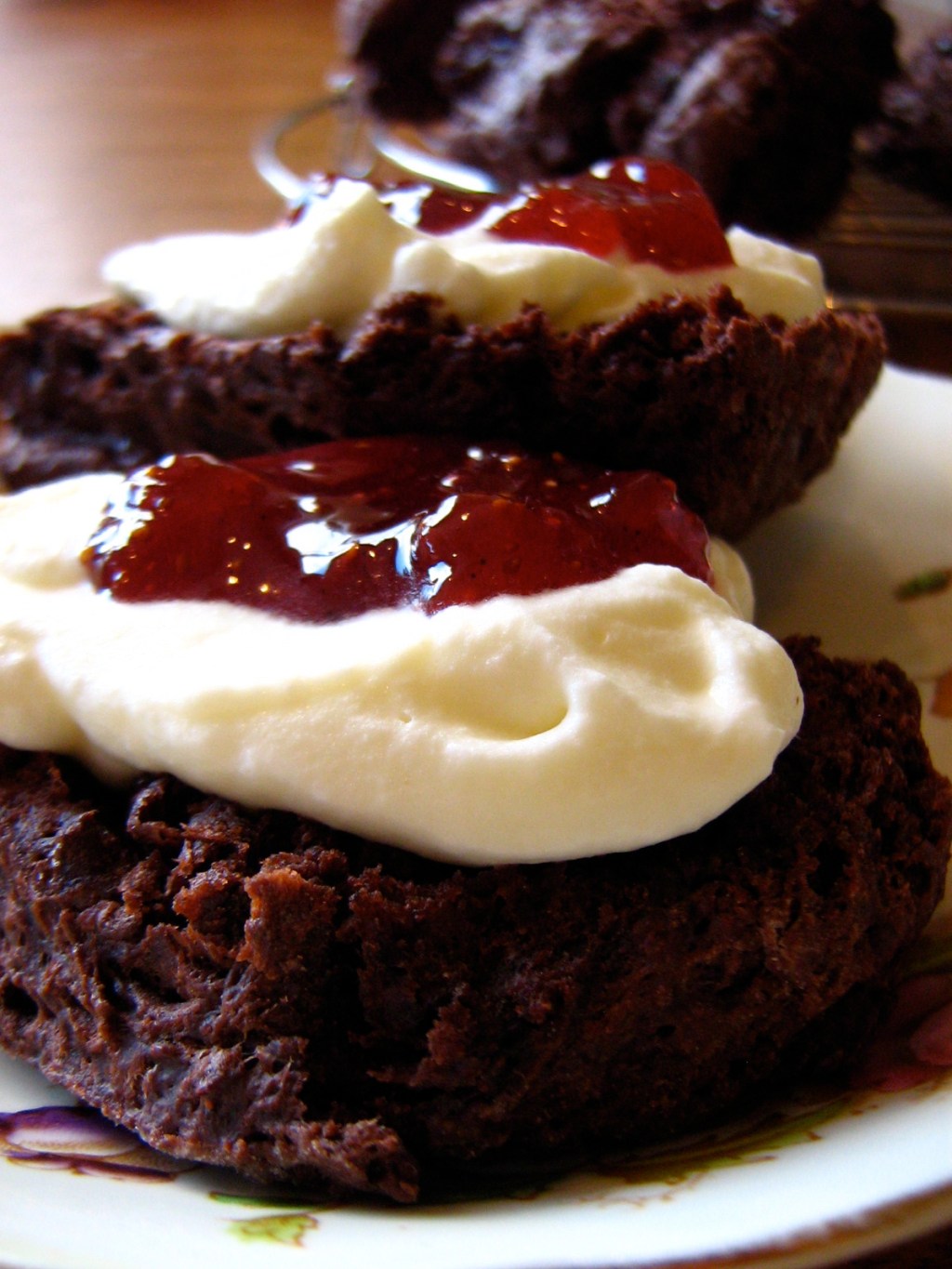
If you are a fan of afternoon tea, such as I am, you might agree that the best part of said afternoon tea is the scones with cream (such as the chocolate scones pictured above). And not just any old kind of cream – it should be Devonshire cream, also known as clotted cream. Real Devonshire cream is made by heating unpasteurized milk over a steam bath until a thick layer of cream “clots” on top, then cooling the milk and skimming off the cream. The resulting cream is so thick (at least 55% fat content!) that it doesn’t need to be whipped, and has a slightly nutty, rich, sweet taste. Absolutely delicious on a fresh baked scone with jam or lemon curd.

To be called Devonshire cream, it should be produced in the county of Devon in the UK. Obviously what follows is not true Devonshire cream because a) it’s not made in Devon, and b) it’s not real clotted cream – but it’s a good approximation, especially considering how easy it is, and how much harder it would be (for me, anyway) to get hold of unpasteurized milk to make the real stuff. This mock Devonshire cream is simply whipping cream with a little bit of cream cheese to add a slightly tangy, rich flavour. Super delicious, and super easy – especially when you have a brand new blender to make it in! Actually, I just wanted an excuse to use the blender and the special whipping blade that came with it – it ended up requiring far more scraping of the sides than I felt was necessary (although it also came with a very effective custom spatula), so a stand or hand-held mixer would be a better choice!

Mock Devonshire Cream

Makes about 1 1/2 cups

In a mixer bowl fitted with the whisk attachment (or blender with whipping blade), combine:

3 oz cream cheese, softened (about 3 heaping tbsp)

1 tbsp sugar

1/8 tsp salt

Beat until light and creamy, scraping down the sides of the bowl as necessary.

With the beater going, slowly pour in:

1 cup whipping cream

Continue beating until soft peaks form. Serve with fresh scones for afternoon tea :) .

Daring Bakers: Scone Mojo

27 Jan

Audax Artifex was our January 2012 Daring Bakers’ host. Aud worked tirelessly to master light and fluffy scones (a/k/a biscuits) to help us create delicious and perfect batches in our own kitchens!

Audax, who can offer a wealth of information, tips, and tricks for every challenge (even when he’s not hosting it), did not disappoint with this one. When I saw that the challenge was scones, I honestly wondered how much I would learn, being that I already considered myself to have “mastered” scones – I learned to make them in grade 7 Home Ec, and have been turning them out very successfully ever since. The spirit of this challenge was to find a way to make scones that works best for you, and Audax did a ton of research on what makes a good scone and the techniques to use to make them more flaky or more tender and cake-like. All things I never knew before! He also went into the difference between a scone and a biscuit, which as far as I understand, mostly comes down to geography: they are essentially the same thing, but in America they are called biscuits, and anywhere with a British influence they are called scones. In general, I personally tend to think of scones as sweet (or served with sweet things) and biscuits as savory (or served with savory things).

Despite the fact that scones (or biscuits, depending on who you’re talking to) are quite simple to make, this challenge actually gave me the most trouble out of any so far – probably because they *are* so simple and I already know how to make them, which somehow lead to me psyching myself out and losing my scone mojo! I made two trial batches of the challenge recipe, one that was supposed to be flakier and the other more tender and cake-like, and invited Lynette over for a scone-tasting tea party. Unfortunately, we were both disappointed with the scones. They were kind of tough and hard, which was surprising to me because I generally make really good scones. I think I got hung up on the instruction in the challenge recipe to handle the dough enough to develop some of the gluten, which helps the scones rise – usually I handle the dough very little and get great results! Turns out that my recipe and the challenge recipe are actually quite similar, so instead of re-inventing the wheel (or the scone, as it were), I decided to go back to *my* recipe – which I already know works best for me – and use some of Audax’s tips and techniques to come up with 1) a more flaky scone, and 2) a more tender, cakey scone. And lo-and-behold, my scone-making mojo returned. Whew! I was worried for a bit. The moral of the story? If it ain’t broke, don’t fix it. And trust your scone-making instincts! ;)

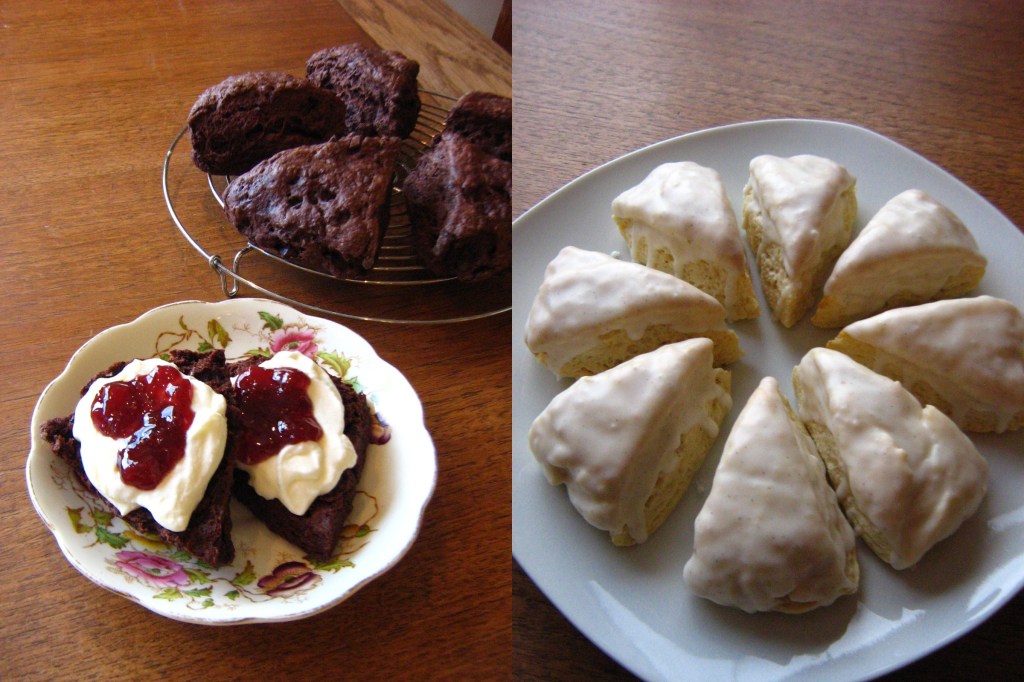
It still took me some trial and error to get these scones just the way I wanted. I was dreaming of a deep, dark, chocolately, flaky scone, and also of a more cakey vanilla bean scone with vanilla glaze (inspired by the Pioneer Woman). I added too much liquid to my first batch of chocolate scones, so they were heavy rather than flaky. However, as soon as I bit into a scone from my second batch, I knew I had gotten it right: deep, dark, and chocolatey in taste but also light and layered in texture. The cocoa powder in the dough kept them from being quite as flaky as scones made with just flour, but they were perfect paired with some Devonshire cream (recipe to come!) and strawberry vanilla jam. The vanilla bean scones weren’t quite vanilla-y enough the first time around, and I made the glaze too thin to actually stay on the scones, so for my second batch, I steeped the vanilla seeds and pods in warm cream, and thickened up the glaze. The result? Subtle vanilla and tender scone perfection.

Thanks Audax for all the work you did in preparation for this challenge! Check out the Daring Kitchen for the original challenge recipe and the scone contributions this month – there are some awesome-looking variations!

Double Dark Chocolate Scones

The techniques used in this recipe – grating the butter, rubbing it into the flour, and folding the dough – can be used with any scone recipe to enhance their flakiness.

In a bowl, whisk together the dry ingredients:

3/4 cup all purpose flour

1/4 cup Dutch process cocoa powder (sifted to get rid of any lumps)

2 tbsp granulated sugar

2 tsp baking powder

pinch of salt

With a box grater, shred:

3 tbsp cold unsalted butter

Toss the butter into the flour-cocoa mixture with a fork, then dive in there with your hands to “rub in” the butter: squeeze the butter and flour gently between your finger tips to create flat little “leaves” of butter coated in flour (this is easiest with cold, dry hands). It should look like this:

Stir in:

2 oz chopped dark chocolate (or chocolate chips)

Pour in:

1/2 cup cold milk

Add the milk all at once and stir briskly with a fork – think of it as more of a folding action to incorporate the dry stuff from the bottom of the bowl with the milk. Stir just until it starts to come together in a loose dough.

Turn the dough out onto a lightly floured surface and squeeze/knead gently once or twice to gather it together. Sprinkle it with a little flour and gently press it flat with your fingertips. Fold it in half and press flat again. Repeat for a total of three folds, then shape it into a circle about 2 cm thick. Cut it into six wedges with a sharp, lightly floured knife. Place on an ungreased cookie sheet and brush the tops lightly with milk (try not to let it drip down the sides – this will interfere with the rise). Bake at 425˚F for 12-14 minutes, until the bottoms sound hollow when tapped with your finger. Cool slightly on a rack, then serve warm with jam and cream.

Vanilla Bean Scones

Using a pastry cutter to cut the butter into tiny bits and a gentle kneading (4-5 times only) results in a more tender, cake-like crumb. Instead of vanilla beans, you can use vanilla extract (about 1 – 1 1/2 tsp) and skip the steeping step – but I love the look of the little black vanilla seeds (aka vanilla caviar, a fittingly decadent nickname!). These are “cream scones” because they are made with cream, but they can also be made with milk. If you don’t want to glaze them, you can brush the tops of the scones with a little extra cream before baking, to give them a nice golden finish.

Vanilla Bean Cream

This is used as the liquid in the scones, and to make the glaze. It needs to be heated and then cooled completely, so make it at least an hour ahead.

Scrape the seeds from 1 vanilla bean and mix them into 1/2 cup + 2 tbsp half and half cream. Throw the scraped pod in there too. Heat the vanilla cream up in the microwave until warm, and it steep with the vanilla for about 15-20 minutes, then refrigerate until completely cold. Remove the empty vanilla pod. Reserve 2 tbsp of the cream for the vanilla bean glaze, and use the remaining 1/2 cup in the scones.

Scones

In a bowl, combine:

1 cup all purpose flour

2 tbsp sugar

2 tsp baking powder

dash salt

Stir together with a whisk, then add:

3 tbsp cold unsalted butter, cubed

Using a pastry cutter, cut the butter into the flour until it is in very small pieces and the mixture resembles coarse bread crumbs, like this:

Pour in:

1/2 cup chilled vanilla bean cream

Add the cream all at once, then stir briskly with a fork, using more of a folding motion to incorporate the dry ingredients from the bottom of the bowl with the cream. Stir until it just starts to come together in a wet dough.

Turn out the dough into a lightly floured surface and knead gently 4-5 times, until the dough comes together in a ball. Press it down with your fingers into a 2 cm thick round, and cut it into 8 wedges with a sharp knife. Place on an ungreased cookie sheet and bake at 425˚F for 12-14 minutes, until lightly browned on top and the bottom sounds hollow when tapped. Allow to cool completely on a rack, then glaze with vanilla bean glaze.

Vanilla Bean Glaze

In a small bowl, stir together:

1 cup icing sugar

1 1/2 – 2 tbsp vanilla bean cream (reserved from earlier)

You want the glaze to be fairly thick, but just runny enough so that it drips down the sides of the scones without all falling right off. Add a little more icing sugar or a few more drops of cream or milk if needed to get the desired consistency.

Dip the tops of the scones in the glaze, then return to the rack (sitting over a plate to catch the drips) to set. The glaze will help keep the scones fresh, but they are best eaten on the same day they are baked.

Variation on a Theme

24 Jan

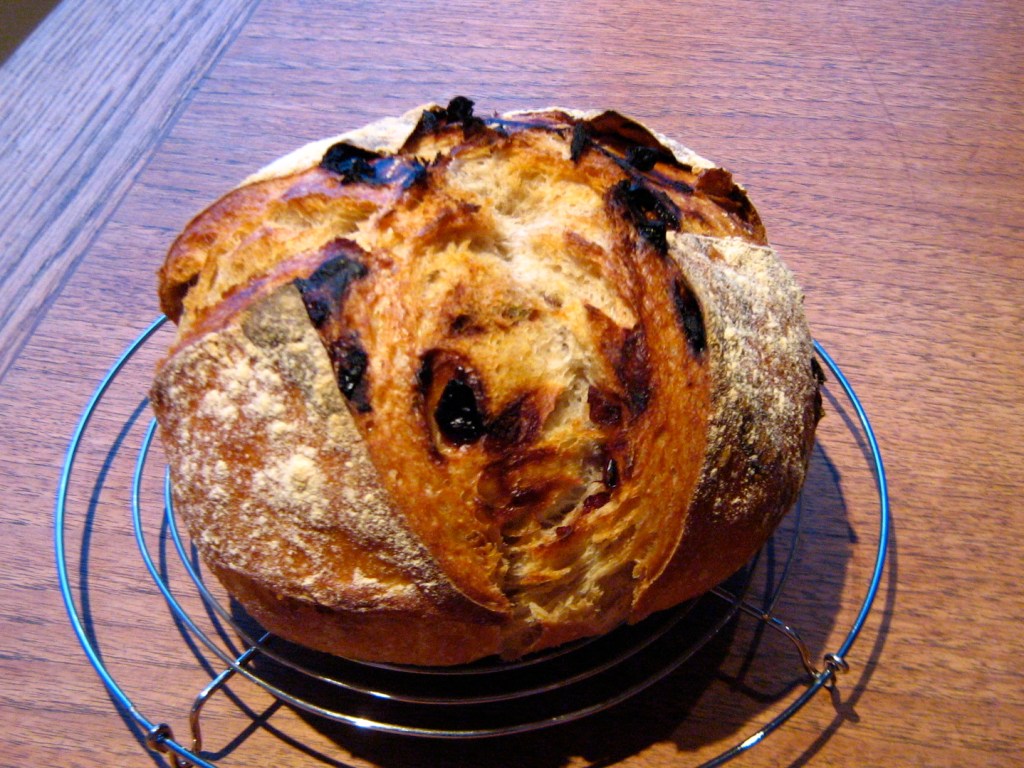
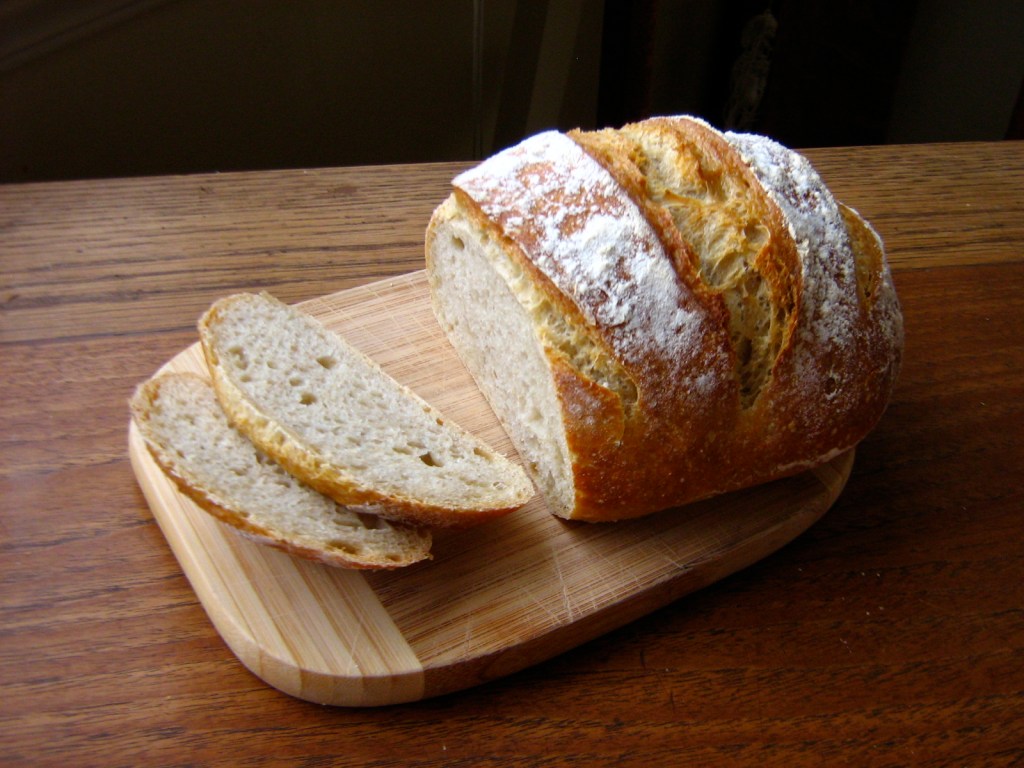
We live near a Cobs Bread bakery, and before I started baking my own bread, we were in there at least once a week to buy fresh bread. One of our favorites was the cranberry sourdough loaf: slightly tangy bread studded with tart, sweet cranberries, wonderful for a sandwich or toast with cheese or butter and jam. I figured this was something I could recreate myself at home using the no-knead crusty artisan bread dough from Artisan Bread in 5 Minutes a Day, which develops a slight sourdough flavour from being stored in the fridge (I’ve been experimenting with using my sourdough starter in the dough, which I will most definitely share when I have it figured out!).

Really, it’s so easy that I’m almost embarrassed – you simply roll out the dough, sprinkle it with dried cranberries, and roll it up again – but it’s so good and would be tweaked to suit any kind of addition to the bread, savory or sweet. I can imagine a beautiful olive or cheese loaf, or rosemary and roasted garlic, or sundried tomato and parmesan, or cinnamon raisin, or chocolate and orange zest, or…

I actually like this version of cranberry sourdough even better than the Cobs bread. It’s chewier and crustier, and you can add as many cranberries as your little heart desires, plus the feeling of accomplishment that comes from baking a loaf of bread makes it a hundred times more delicious. Try it and see!

Crusty Cranberry Bread

Before making this bread, familiarize yourself with the method in this post: Crusty No-Knead Bread… in 5 Minutes a Day! Technique inspired by this post.

First of all, stir yourself up a batch of no-knead crusty artisan bread dough and let it sit overnight or longer in the fridge to develop some sourdough-ish flavour. When you are ready to bake, cut off a 1 – 1 1/3 lb piece of dough (I used 1 1/3-ish lbs), sprinkle it gently with flour, and form it into a ball with your hands by pulling down the top and sides and pinching them underneath. This should only take a few seconds. Place the dough ball on a lightly floured surface and press it into a rectangle with your fingers (don’t knead it!). You want to use just enough flour to keep the dough from sticking to your work surface, but not any more than is necessary, otherwise the dough will be too dry. Use a lightly floured rolling pin to roll it into a rectangle about 1 cm thick (the dimensions don’t matter). Sprinkle the dough with a few handfuls of chopped dried cranberries, covering the dough evenly right to the edges, then roll it up tightly from one short end. Pick the roll up in your hands and tuck the ends under. Using the same technique you used earlier to form the lump of plain dough into a ball, gently pull the top and sides of the cranberry’d dough and tuck them underneath to form a smooth ball. Sprinkle sparingly with a little bit of flour if it sticks to your hands too much, and don’t worry if a few cranberries burst through. Place the dough on a square of parchment paper and let it rest, uncovered, for 40-90 minutes for a 1 lb loaf, and up to 2 hours for a 1 1/3 lb loaf. You will know it has rested enough if it jiggles slightly when you tug on the parchment paper. With 20 minutes to left in the rest period, prepare the oven by placing a pizza stone on the center rack and a roasting pan on a lower rack. Preheat the oven to 450˚F. When the dough is fully rested and the oven is hot, sprinkle the dough lightly with flour and slash it 1/4″ deep with a serrated knife. Place the dough and parchment paper on the preheated pizza stone, then pour a mug of hot tap water into the roasting pan. The steam will make the crust shiny and crisp. Bake for 30-55 minutes (depending on the size of your loaf), until dark brown and crusty. Cool completely on a rack before slicing.


Chocolate Hazelnut Banana Bread

17 Jan

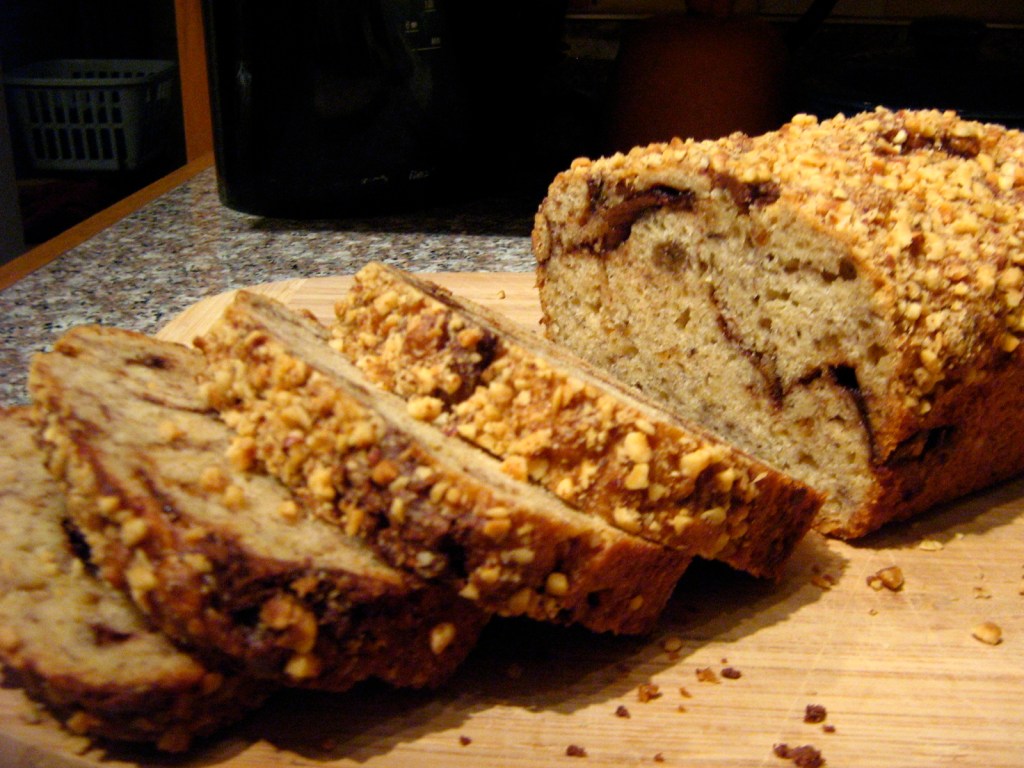
This Chocolate Hazelnut Banana Bread is sure to derail your New Year’s resolutions to eat less sugar and/or chocolate. I have stopped trying to make those kinds of resolutions for myself, because they never last long and I just straight up love sugar and chocolate (luckily I also love exercise, so it balances out). The collection of over-ripe frozen bananas in my freezer was approaching epic proportions, so I figured it was time for a batch of the best banana bread in the entire world ever. I’m also trying to find ways to use up the crazy amount of Nutella that I got for Christmas that doesn’t involve eating it straight out of the jar (at least I use a spoon), and the logical progression was to combine the two. The result is that banana bread plus Nutella plus hazelnuts equals love. That’s all you need to know. If you really feel you have to justify it to yourself, rest assured that bananas and hazelnuts are actually considered to be quite good for you. (Just ignore all the sugar and chocolate.)

(Also, sorry for ruining your New Year’s health kick ;) . )

Chocolate Hazelnut Banana Bread

Makes 2 loaves. Recipe can easily be halved.

Preheat the oven to 375˚F. Place 3/4 cup whole, raw hazelnuts in an oven-proof dish and toast them in the oven for 20-25 minutes, stirring a few times, until they are fragrant, lightly browned, and their skins start to curl off. Place them in a clean tea towel and rub them vigorously in the towel to remove most of the skins. Let the nuts cool, then chop them finely. Yay new food processor! (A knife will also suffice.) Grease two 9″ x 5″ loaf pans with butter, then sprinkle the bottom and sides of each pan with about 1 tbsp of the chopped hazelnuts. Set the nuts and pans aside.

Turn down the oven to 350˚F. In a medium bowl, combine:

6 large, very ripe bananas (the blacker and mushier the better)

4 eggs

1 tbsp vanilla extract

Beat with a fork or whisk to break up the bananas (a few chunkier bits are OK).

In a large bowl, combine the dry ingredients:

3 1/2 cups all purpose flour

1 1/4 cup granulated sugar

2 tsp baking powder

3/4 tsp salt

1/2 tsp baking soda

Add 1 cup cold butter, cubed, and cut it into the flour mixture with a pastry cutter until it resembled coarse bread crumbs. Pour in the banana mixture and fold it with a spatula until just combined – if you over-mix the batter, the banana bread will be tough, so stop mixing when there are still a few flecks of dry flour left. Divide half of the batter evenly between the two prepared loaf pans and spread it out to cover the bottom of each. Top the batter in each pan with about 2 tbsp of Nutella in little dollops, and sprinkle with 1-2 tbsp chopped hazelnuts. Top with the remaining batter and dollop with another 1 1/2 tbsp of Nutella. With a chopstick or the tip of a butter knife, swirl the Nutella through the batter. Sprinkle the batter with another 1-2 tbsp chopped hazelnuts. Bake the loaves at 350˚F for 55-65 minutes, until a toothpick inserted in the centre comes out clean. Let cool in the pans for about 5 minutes, then run a knife around the sides of the pan and turn out onto a rack to cool completely. Devour.

Comfort in Pastry Form

11 Jan

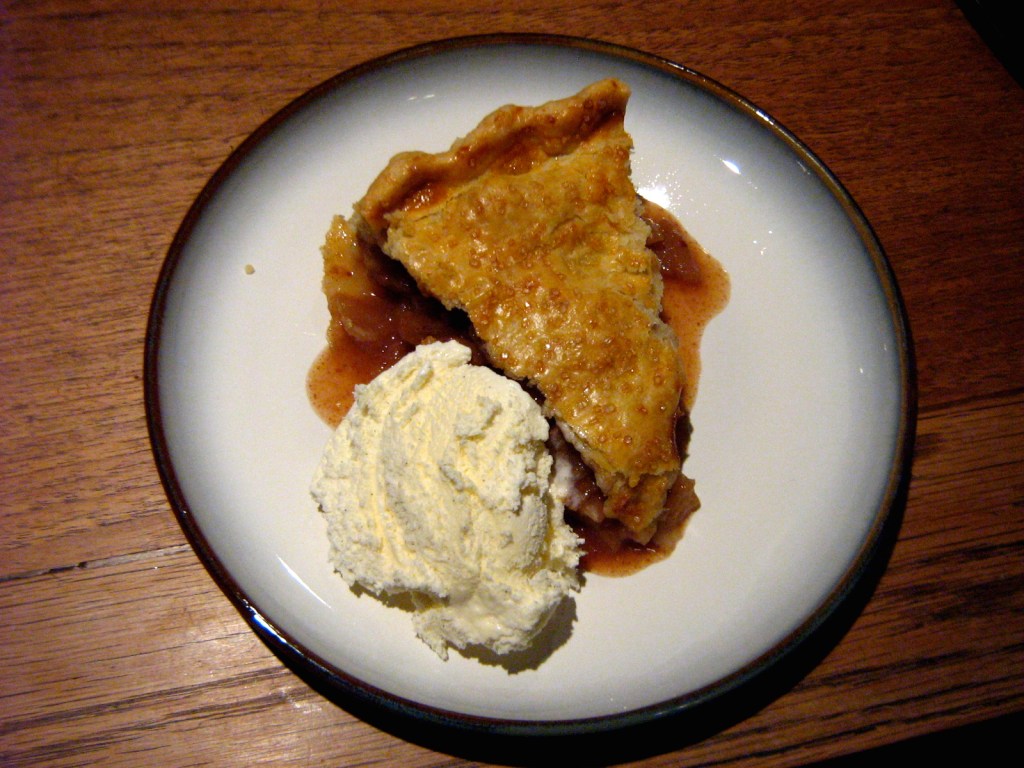
After almost two weeks of time off over the holidays, it was really hard to contemplate going back to work, so on my last day off, to make myself feel better about it, I made the most comforting thing I could think of: apple pie. My mum had given me a bag of apples from her friend’s tree when I visited my parents over Christmas, and while some of them were past their prime and some of them were slightly splotchy, the majority of them were just right for a pie.

This recipe is the one that introduced me to my no-fail, super-easy pie crust, so it has a special place in my heart. It’s from Canadian Living, and I always feel “extra Canadian” when I use one of their recipes – I know, weird, but it’s a good feeling and that’s what I was going for. While there is really nothing exciting or different about apple pie in general nor this one in particular, this iteration happens to be my favorite. In fact, it might be my favorite because it’s not exciting or different – it’s familiar and homey, which is why I wanted to share it. I like the methodical nature of making this pie: stirring together the pie crust, peeling the apples, fluting the edge, and knowing exactly what comes next. There is comfort in that routine. And using apples grown by a friend of my mother rather than anonymous grocery store fruit made me feel even better. This was a feel good pie, and I hope makes you feel good, too. Now before I get any sappier, here’s how you make it!

My Favorite Apple Pie

Adapted from Canadian Living

Flaky Pastry

In a large bowl, cream together:

1/2 cup unsalted butter, softened

1/2 cup less 1 tbsp shortening

(or any combination of the above (or all butter), totaling 1 cup less 1 tbsp)

Add:

2 1/4 cups all purpose flour

3/4 tsp salt

Stir into the butter mixture until ragged. The idea is to smear the flour into the butter – this will help make it flaky – but don’t over-mix.

Pour in:

1/2 cup ice cold water

Stir until a loose dough forms. Turn the dough into a floured surface, divide in half, and form each half into a flat circle. Wrap in plastic and chill for at least 1 hour or until firm.

Preheat the oven to 425˚F. On a floured surface, roll out one of the chilled pastry discs to fit a 9″ pie plate. Press the pastry into the pie plate.

Filling

Peel and slice enough apples to make 8 cups (I used about 17 smallish apples). In a bowl, combine the apples with:

2 tbsp lemon juice

1/2 cup brown sugar

3 tbsp all purpose flour

1 tsp cinnamon

1/8 tsp allspice (optional)

Pour the apple mixture into the pastry-lined pie plate, then moisten the edge of the pastry. Roll out the second piece of pastry, drape it over the apples, and press it around the edges to seal. Trim the pastry, leaving about 3/4 inch overhang, then fold the overhang underneath itself and flute the edge. Brush the pastry with egg wash (1 egg yolk mixed with 1 tbsp water), sprinkle it with coarse sugar, and cut a few steam vents. Bake in the bottom third of the 425˚F oven for 15 minutes, then reduce the heat to 350˚F and bake for 40 minutes longer, or until the pastry is deep golden and the filling is bubbling. Cool on a rack. If you want the pie to slice cleanly, wait until it is completely cool before cutting. If you’re not afraid of a little pie juice, cut yourself a slice while it’s still a bit warm and eat it with vanilla ice cream. So comforting!

Crusty No-Knead Bread… in 5 Minutes a Day!

6 Jan

I bought the book Artisan Bread in 5 Minutes a Day a few years ago after seeing a post on Steamy Kitchen about the caramel pecan cinnamon rolls that come from the book. I made the rolls and immediately knew I had to have the book, they were so good. The premise of the recipes in the book is to stir up a batch of very wet (high hydration) dough which you store in the fridge and then pull off a chunk to bake as desired. The wet dough plus the long rising and fermentation time develops the gluten in the dough without the need for kneading (heh!) and results in a delicious bread with a chewy crust and airy interior (which I’m still working to perfect) that literally only takes about five minutes of active time – the rest is just… rest. I have been making this bread exclusively for about two and a half months now, and we have not bought any bread in that time – just a lot of flour!

Artisan Bread in 5 Minutes a Day gives recipes for dozens of different bread doughs, ranging from peasant breads to multigrain breads to flatbreads and pizzas to breads enriched with butter, honey and eggs (such as challah and brioche, great for making caramel pecan rolls!), all of which can be varied with different flavours and additions (herbs, spices, dried fruit, cheese, olives, etc) to create pretty much whatever you can dream up. This recipe is for the basic Master Dough, which is a lean dough (just flour, water, yeast and salt) that can be baked into boules (as shown), baguettes, couronnes (like a giant bagel), or even used as pizza crust. It makes great sandwiches when it is fresh, and wonderful toast when it is a day or so old. One batch of dough makes enough for four small one pound loaves, which each last me and Nate about two days.

Bread often gets put in the black books of healthy eating, but not all bread is created equal. Floppy white grocery store bread that travels to the store in a bag and lasts two weeks without getting stale or mouldy is totally inferior to crusty, fresh-baked, open-crumbed artisan bread – not just aesthetically but also as a food source. I recently learned that the longer it takes for bread to rise and ferment, the better it is for you. This is because the yeasts and bacteria in the bread actually break down and partially digest the carbs and sugars, and the longer they have to do this, the easier the bread is to digest. This is especially true if the bread contains whole grains, which become more nutritionally available to your body with a long fermentation time (otherwise they’re just fiber). Artisan bread, with its long production time (usually several hours, and sometimes days!), is therefore easier to digest and more nutritious than bagged grocery store bread, which is made so expediently that the yeast doesn’t have time to break anything down, and is also pumped so full of additives and preservatives that it can’t break down, period.

Another thing I learned is that the crust plays an important role. A chewy, crunchy bread crust forces you to actually chew your food (mechanical digestion), and also stimulates saliva, which starts breaking down the nutrients (chemical digestion), making the job of your stomach much easier – again, being hard to digest is one reason many people avoid bread. Soft, floppy, crustless bread that you don’t even have to chew is definitely going to sit in your stomach and make you feel ill, so don’t even bother with it: go straight for the crusty, delicious artisan bread and do your stomach and your taste buds a favour!

(I apologize for spending the last two paragraphs talking about digestion – I know it’s not the most appetizing thing to read about on a food blog, but I thought it was cool, so… yeah ;) . )

Anyway, here is the recipe. Definitely try it, and also check out the Artisan Bread in 5 Minutes a Day website, where the book’s authors post all kinds of awesome tips, tricks, videos, and additional recipes for their breads :) .

No-Knead Crusty Artisan Bread

This is my adapted version of the Master Recipe from Artisan Bread in 5 Minutes a Day. I use a reduced amount of salt, a mixture of all purpose and whole wheat flours, and have increased the amount of water to get the moisture level right (see notes below). I also bake the dough on parchment paper, rather than using a pizza peel to transfer the loaf to and from the pizza stone in the oven. You will need a large bowl or container (4-6 quarts in size) with a lid in which to mix and store the dough, and preferably a pizza stone (aka a baking stone) on which to bake the bread (but there are other ways to bake it too – see notes below). The dough can be stored for up to 2 weeks in the fridge – the longer it is stored, the more of a sourdough flavour it gets. Makes about 4 lbs of dough – enough for 4 x 1 lb loaves.

In a large (4-6 quart) bowl or container with a lid, mix together:

3 1/3 cups warm water (this is the amount that works for me with higher protein Canadian all-purpose flour – your experience may vary)

1 tbsp coarse sea salt

1 1/2 tbsp granulated yeast - instant, regular, whatever

Don’t worry if it doesn’t all dissolve nicely.

In a slightly smaller bowl, combine:

5 1/2 cups unbleached all-purpose flour (unbleached is important!)

1 cup whole wheat flour

(or 6 1/2 cups unbleached all-purpose flour only)

Measure the flour by “scooping and sweeping”, like so:

Dump the flour into the water mixture and stir it briskly until it is evenly moistened. You can get in there with your hands if you need to – just resist the urge to knead! The resulting dough should be very wet and sticky. Put the lid on the bowl/container – you don’t want an air-tight seal, but you do want the dough covered completely so it doesn’t dry out (I usually put a jar of peanut butter on top of the bowl to keep the lid down!). Leave the dough to rise at room temperature for 2 hours or until the top starts to flatten out and deflate a little bit, after which it will look something like this: All those bubbles are going to make your bread lovely and airy, so don’t squish it down, whatever you do. Place the covered container in the fridge and refrigerate for at least a few hours – the dough can be baked with after the first 2 hour rise but is much easier to handle after being chilled. Store in the fridge up to 2 weeks.

When you are ready to bake bread, take the dough out of the fridge and sprinkle a small part of the surface with flour so it doesn’t stick to your hands (you will notice that the dough has sunk quite a bit – this is fine because as long as you don’t press it down, all the bubbles are still intact!). Grab the floured dough and pull out about 1 lb of dough (the size of a grapefruit). I use scissors to cut off the chunk of dough. Try not to squash the dough too much, and don’t knead it! Pick it up in your hands, dust it with a little bit more flour and quickly shape it into a ball (or “boule”) by gently pulling the top of the dough and tucking it underneath. Try to do this by handling it as little as possible (this takes some practice) – it should take about 5 seconds tops. Place the ball of dough, tucked ends down, into a piece of parchment paper. Let it rest, uncovered, at room temperature for 40-90 minutes. With about 20 minutes left in the rest period, prepare the oven. Place a pizza stone on a central shelf, and on any other shelf that won’t interfere with the rising bread (below is good!), place a metal roasting pan. Heat the oven to 450˚F and let it preheat for at least 20 minutes (your pizza stone may take longer to heat up completely).When the oven is preheated and the dough is fully rested, dust the shaped boule with flour and slash it about 1/4″ deep with a serrated knife – this allows the bread to expand in the oven in a predictable fashion, rather than splitting open randomly. Depending on the age of the stored dough, at the end of the rest period it may not have changed much in size or shape (fresher dough) or it may have flattened out (older dough), but it should jiggle if you tug on the parchment paper. Place the dough and parchment paper on the preheated pizza stone, then pour a mug full of hot tap water into the roasting pan, and shut the door quickly to trap the steam. The steam helps make the crust crisp and brown. Bake for 30-45 minutes, until the bread is a very deep brown. You will notice that it has expanded quite a bit – this is called oven spring. Let the bread cool completely on a rack before slicing it. This bread only lasts 2-3 days in our house, so we keep it uncovered on the counter, sitting cut-side down on a cutting board. This way the crust stays crisp and the cut end doesn’t get stale.

Some notes:

Feel free to make a 1 1/2 – 2 lb loaf – just let it rest and bake longer.

The original recipe was developed using American flour, but Canadian flour is higher in protein (about 12% versus 8-9%) and therefore absorbs more water, so I use 1/3 cup more water than the original recipe calls for. It may take a few tries to play around with the amount of water that works for you – see this post for more information.

If you under-bake the bread, the crust will lose its crispness as it cools. It should be quite dark brown and caramelized-looking when it comes out of the oven. The crust will also lose its crispness if you cut into it while it’s still warm.

The more large air holes inside the bread (an “airy crumb”), the better. This can be achieved with a wetter dough to start with or a longer resting time. One tip is to shape the dough in the morning, then cover it lightly with plastic and let it rest all day in the fridge, then bake it in the evening. This ensures a good long rest and lots of air hole formation. See this post for more tips.

If you don’t have a pizza stone, you can bake this bread in a Dutch oven, which works really well. I’ve also just used a regular baking sheet and the bread came out fine, but a pizza stone gives it a better crust. My pizza stone is handmade of terracotta and was a Christmas present from my parents. I love it!

Sourdough Pancakes

1 Jan

Happy New Year!!

The end of this month marks one year since I started this blog, and I just wanted to say thank you to everyone who has visited and read my blog over the past year. I’ve had a ton of fun cooking and taking pictures and writing and I’m excited for another year of good food. Cheers! :D

And now back to important matters at hand: Sourdough Pancakes!

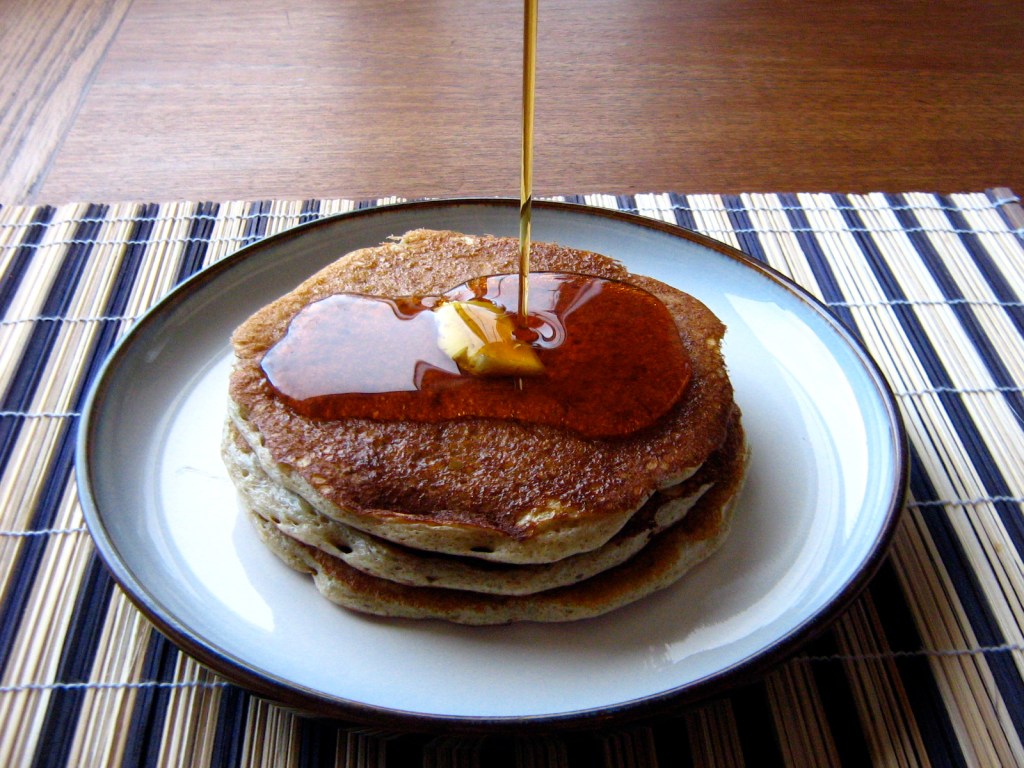
As I now have a Tupperware container of sourdough starter living in my fridge, I’ve been looking for ways to use the excess that comes out of every feeding. I’ve made these pancakes twice now (on the list are also crumpets, English muffins, and obviously, bread) and they are delicious! Light and fluffy, they have a more complex flavour than regular pancakes, thanks to the fermentation of the yeasts in the starter. They are full of bubbles and have an almost lacy texture because of it.

These pancakes are very absorbent little sponges, so to give them something in addition to maple syrup to soak up without becoming sickly sweet, I made a quick strawberry-orange sauce: about 1 cup of frozen strawberries cooked with the juice of 2 mandarin oranges, a dash of water, and a few tablespoons of sugar. I boiled it until it thickened slightly, then pureed it in the blender and served it warm with the pancakes and maple syrup.

You need 3/4 cup starter to make these, which is more than the extra I end up with after each feeding, so I put that extra starter in another Tupperware container and “save up” until I have enough. Right now I’m feeding my starter once a week, so it takes a few weeks for the “extra” starter to amount to 3/4 cup, but it seems perfectly happy to sit in the fridge in the interim. If it looks like it needs feeding (ie, lots of liquid “hootch” on top), then I’ll just add a small amount of flour and water (equal parts by weight) to keep it happy until I’m ready to use it.

Sourdough Pancakes

Recipe from Allrecipes.com. Makes 6-8 pancakes.

Preheat a large skillet over medium-low (4 out of 10) heat.

In a large measuring cup (or a medium bowl with a pouring spout), mix together:

3/4 cup sourdough starter

1 egg

2 tbsp water (can use more or less depending on the thickness of your starter)

2 tsp vegetable oil

(1 tsp vanilla would be a good addition too!)

In another small bowl, combine:

1/3 cup powdered milk

3/4 tsp salt

1 tsp baking soda

1-2 tbsp granulated sugar

Whisk the powdered milk mixture into the starter mixture until smooth (don’t worry about over-mixing like regular pancake batter). It should be a bit thinner than regular pancake batter and sort of foamy.

Grease the heated skillet with a bit of vegetable oil on a paper towel, then pour about 1/4 – 1/3 cup of the batter into the pan. The batter will spread out a bit, so I like to cook just one pancake at a time. The surface of the pancake will be covered in irregular-sized bubbles. Cook until the edges are slightly dry and the bottom is deeply golden, then flip using a thin spatula. Cook until the other side is just as deeply golden, about 30-45 seconds.

Serve warm with butter, syrup, etc…

Follow

Get every new post delivered to your Inbox.

Join 581 other followers